Signs It’s Time to Fire Your Property Manager (San Diego Owners)
By Scott Engle, Broker/Owner – Realty Management Group | Last updated January 2026
If your property manager increases uncertainty over time instead of reducing it—through slow communication, surprise charges, weak documentation, or reactive maintenance—that’s a systemic failure, not a temporary issue. In San Diego’s layered regulatory environment, those failures can quickly turn into meaningful financial and legal exposure.
In practice, firing decisions are rarely triggered by a single incident but by recurring San Diego property management failures that signal deeper structural problems over time.
For many owners, those structural problems become impossible to ignore once surprise property management fees begin appearing without clear explanation or advance disclosure. Understanding the true annual cost of management — including leasing fees, renewal fees, and maintenance markups — is essential before evaluating whether your current manager represents good value. See our full cost breakdown: How Much San Diego Property Managers Actually Cost: Flat Fee vs 8% Management Explained.
If you’re unsure whether these issues are isolated mistakes or signs of a deeper systemic failure, this diagnostic lays it out clearly: 7 warning signs of bad property management in San Diego.
TL;DR (For San Diego Rental Owners)
Occasional mistakes happen in property management. Repeated, unexplained, or poorly documented issues do not. When your property manager increases uncertainty instead of reducing it, that points to a structural failure that can quietly erode returns and increase legal exposure in San Diego.
Who This Is For
San Diego County rental property owners currently working with a property manager and questioning whether ongoing issues are normal—or a sign of deeper operational failure.
What You’ll Learn
- How to distinguish normal management friction from systemic problems
- Which warning signs matter most in San Diego
- How recent legal changes increase owner risk
- How to change property managers without disrupting your tenant or rent collection
Introduction
Most San Diego rental property owners don’t plan to fire their property manager. Many tolerate problems longer than they should because they aren’t sure whether what they’re experiencing is simply part of property management—or a sign that something is fundamentally wrong.
Unreturned emails. Confusing charges. Repairs that always seem “urgent.” Individually, these issues may feel manageable. Left unaddressed, they often lead to higher operating costs, tenant instability, and increased legal exposure—especially in a market as regulated as San Diego.
In our experience overseeing rentals across San Diego County, the healthiest owner–manager relationships are built on predictable systems, clear documentation, and early escalation—not constant reaction.
Quick Answer: When Should a San Diego Owner Fire Their Property Manager?
Quick answer: A San Diego rental owner should consider switching property managers when issues are repeated, poorly documented, or only communicated after they escalate. In a market with layered local and state rules, weak systems can create real financial and compliance exposure—not just inconvenience.
- Responses regularly exceed one business day
- Surprise charges appear without receipts, scope, or approval history
- Maintenance stays reactive instead of planned
- HOA or tenant issues are disclosed only after fines or escalation
- Notice and deposit documentation can’t be produced quickly
If two or more are happening consistently, it’s usually a systems problem—and it’s time to evaluate alternatives, including San Diego property management teams with clearer documentation and controls.
Occasional mistakes happen. Patterns are the problem. In San Diego’s regulatory environment, repeated failures often carry financial or legal consequences beyond inconvenience.
Occasional Issues vs. Systemic Failure
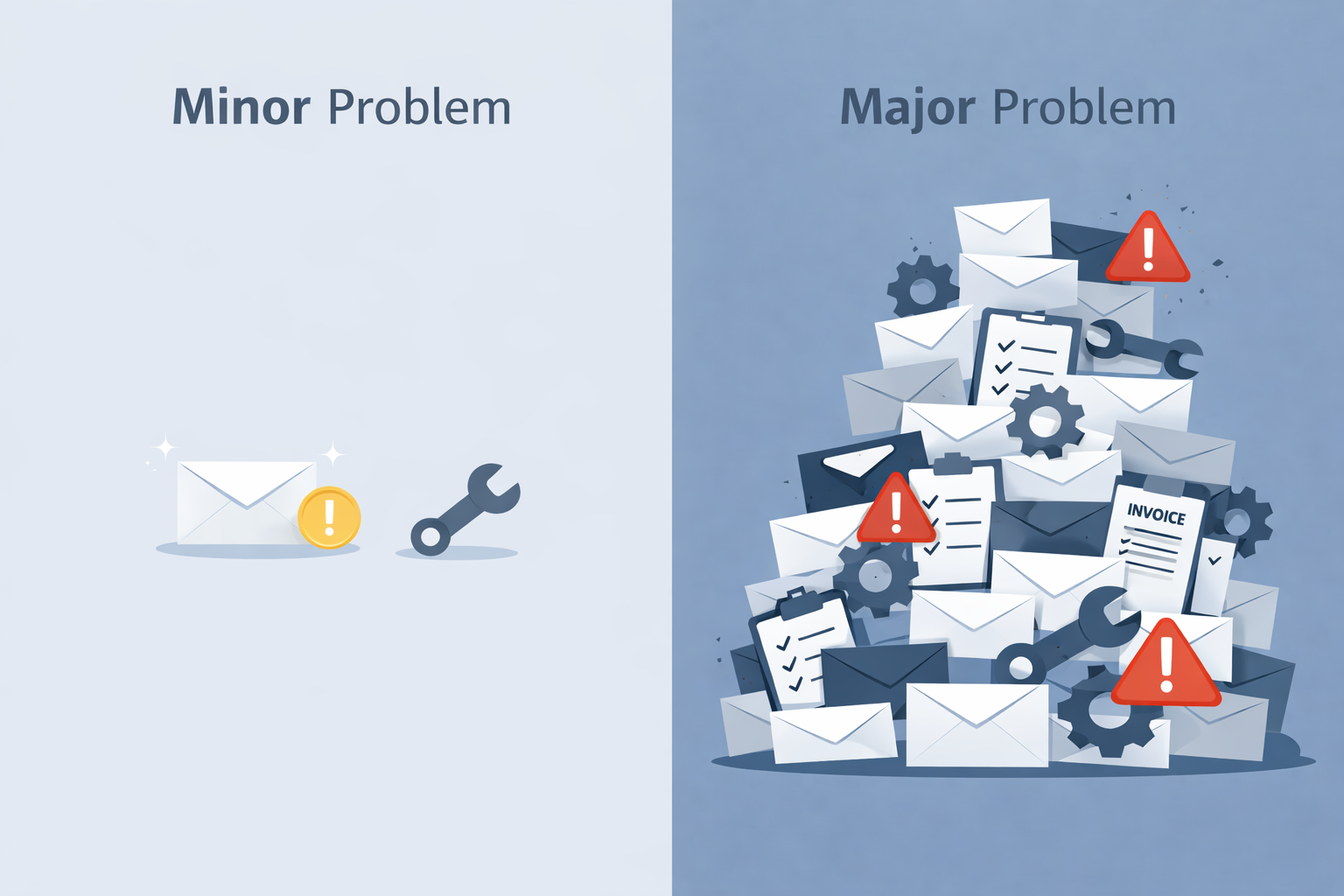
Every property management company will occasionally miss a call, deal with a difficult tenant, or face an unexpected repair. Isolated issues alone are not a reason to fire a property manager.
The concern arises when the same issue repeats without process improvement. If a problem occurs more than once or twice and no system change follows, it is no longer incidental—it is operational.
Systemic failures compound. Over time, they increase costs, delay enforcement, weaken documentation, and expose owners to avoidable risk.
Quick Reference: Professional Standard vs. Persistent Red Flag Pattern
- Communication: Same day or within one business day vs. responses consistently exceed 48 hours or remain vague
- Maintenance: Pre-set approval limits (commonly $300–$500) vs. surprise bills for routine items without context
- Compliance: Written records of notices and just-cause actions vs. verbal updates or missing files
- HOA Issues: Immediate escalation to the owner vs. owner learns through a fine or violation notice
- Accounting: Transparent, line-item statements vs. lump-sum “maintenance” charges
Warning Signs You Should Not Ignore
1. Communication Is Slow or Inconsistent
Delayed or unclear responses stall decision-making and create tenant confusion. If you’re relying on a San Diego property management team, consistent communication should reduce uncertainty over time—not increase it.
2. Surprise Charges Appear Without Clear Explanation
Opaque billing often reflects weak reporting systems or unclear authorization policies. Owners should be able to see clear line items, documentation, and approval thresholds—especially for recurring work. A percentage-based management model compounds this problem because fees scale with rent regardless of service quality. For a full comparison of what management actually costs in San Diego, see: How Much San Diego Property Managers Actually Cost: Flat Fee vs 8% Management Explained.
3. Every Repair Is Treated as an Emergency
Reactive maintenance increases long-term costs and shortens the life of major systems. The most expensive repairs are often small issues—minor leaks, electrical warnings, HVAC alerts—that were patched repeatedly instead of resolved properly.
San Diego math: On a $3,000 per month rental, each week of vacancy costs roughly $750 in lost rent. A turnover delayed by just 14 days creates a $1,500 hit to annual ROI—often exceeding the cost of the original repair that was delayed.
4. Problems Are Disclosed Only After They Escalate
Late rent, HOA notices, or tenant complaints surface only after damage is done. This is especially common in HOA-heavy condo corridors and dense submarkets like Mission Valley, where Mission Valley property management requires early escalation and tight documentation.
5. You Feel Disconnected From Decisions Affecting Your Property
Good management increases clarity—it doesn’t remove owner visibility. Owners should clearly understand who has decision authority, when approvals are needed, and how exceptions are handled.
6. Documentation Is Incomplete or Difficult to Obtain
Owners struggle to access records for notices, tenant communication, maintenance history, or security deposit disposition. This is a high-risk failure category because documentation is what protects you during disputes.
Critical compliance risk: California law imposes a strict 21-day deadline for returning security deposits or providing an itemized statement. If your property manager cannot document compliance, owners may face bad-faith exposure. Documentation expectations have also increased under newer rules like AB 2801.
Helpful references: AB 2801 summary · AB 2347 summary · California Department of Real Estate
7. Maintenance Fees Feel Misaligned With Your Interests
Some firms treat maintenance coordination as a profit center rather than an administrative service. If costs rise without explanation, owners should understand how vendors are selected, how approvals work, and how any coordination fees are disclosed.
Why This Is Especially Risky in San Diego (2025–2026 Legal Context)

San Diego’s Tenant Protection Ordinance adds requirements beyond statewide AB 1482. Managers relying on generic templates—or outdated workflows—may expose owners to risk if local disclosures or relocation rules are mishandled.
Recent statewide updates reinforce this trend. Individually, these changes are manageable. Together, they raise the cost of outdated management practices and weak documentation.
San Diego Property Management Health Check
Use the checklist below to assess whether your current issues are isolated—or systemic:
- Do response times regularly exceed one business day?
- Have you received surprise maintenance charges more than once in a leasing cycle?
- Can your manager promptly produce notice records, deposit ledgers, and repair documentation?
- Are tenant or HOA issues reported early—or only after escalation?
- Do you clearly understand approval thresholds and decision authority?
If you answer “yes” to two or more, management risk is elevated. If three or more persist over time, the issue is likely systemic. If you’re unsure, start with San Diego County property management standards and documentation expectations.
Optional: Free San Diego Rental Health Review
Some owners prefer a second set of eyes to confirm whether current issues are isolated or systemic. A rental health review focuses on documentation, maintenance workflows, approval thresholds, and compliance exposure—without disrupting your tenant.

A Typical 30-Day Property Management Transition Timeline (San Diego)
- Day 1: Formal termination notice issued in accordance with the Property Management Agreement.
- Day 5: Tenant file and certified rent ledger requested and reviewed to ensure continuity.
- Day 15: Security deposit funds reconciled and transferred to the new trust account with documentation.
- Day 30: Keys, access credentials, and records fully transferred and management authority cleanly established.
This timeline reflects how a professional transition is typically handled to minimize tenant disruption and rent interruption across San Diego County, including high-volume submarkets like Chula Vista and La Mesa.
Key Takeaways
- Repeated unresolved issues signal systemic management failure — not normal friction
- Reactive maintenance quietly erodes returns through vacancy loss and deferred costs
- Documentation gaps create real legal exposure under California Civil Code §1950.5 and AB 2801
- Recent laws including AB 1482, AB 2801, and AB 2747 increase the cost of outdated management practices
- Changing managers is about fixing systems, not disrupting tenants
- Understanding your total annual management cost — including leasing fees and markups — is the first step in evaluating whether your current manager is worth keeping
Frequently Asked Questions
How do I know if my property manager is actually doing a bad job?
Repeated issues without improvement—especially around communication, billing, maintenance, or documentation—usually indicate broken systems rather than isolated mistakes.
Is it risky to fire a property manager in San Diego?
It can be if records or tenant communication are mishandled during the transition. When planned correctly with secured records and coordinated handoffs, risk is limited and manageable.
Will switching managers disrupt my tenant or rent payments?
Not when the transition is handled clearly and professionally, with documented notices, clean ledgers, and a coordinated handoff. See our step-by-step guide: How to Switch Property Managers Without Losing Tenants.
What documents should transfer to a new property manager?
The lease and addenda, rent ledger, security deposit records, maintenance history, vendor invoices, notice documentation, and any HOA correspondence.
How long does it usually take to switch property managers?
Most transitions take approximately 30 days when contracts and records are in order.
Can outdated legal knowledge really hurt owners?
Yes. Even small timing or documentation errors can delay enforcement, create deposit disputes, or increase liability exposure—especially under San Diego’s layered rules including the local Tenant Protection Ordinance and statewide AB 1482.
What’s the clearest sign it’s time to switch?
When owner uncertainty and stress increase over time instead of decreasing, despite repeated conversations and recurring problems.
What to Do Next
Request your last three owner statements and your complete tenant file. Once you have your documents, follow our step-by-step guide on how to switch property managers without losing tenants. Review how communication, approvals, and documentation are handled. The clarity—or confusion—will usually give you your answer.
Helpful links: San Diego County Property Management · San Diego Property Management · Free Rental Analysis
Related blog posts: How Much San Diego Property Managers Actually Cost: Flat Fee vs 8% Management Explained · San Diego Property Management Fees: Flat Fee vs. Percentage · Rents Are Dropping: What to Look for in a San Diego Property Manager · California Rental Laws 2026: What Landlords Need to Know · Mission Valley Property Management: Neighborhood Insights · Accidental Landlord Guide for San Diego County