
How Property Managers Enforce Lease Violations in San Diego County
Author: Scott Engle, Broker/Owner – Realty Management Group
Last Updated: February 2026
Introduction
Lease enforcement is not a tenant-management issue. It is an evidence, timing, and notice-eligibility problem.
In San Diego County, owners lose enforcement leverage when lease violations are handled through verbal tolerance instead of written, timestamped action. Each undocumented warning weakens the factual record, delays lawful escalation, and increases the probability that later notices will be challenged or rendered unusable under California’s tenant-protection framework. What begins as a minor, correctable breach often escalates into a prolonged dispute solely because early enforcement lacked documentation.
Professional property managers treat lease violations as triggered events governed by written standards, evidence thresholds, and statutory timelines. This article explains how violations are enforced in practice—and why verbal tolerance reliably destroys enforcement options.
TL;DR
Lease violations are enforced through written documentation and lawful notice, not verbal warnings. In San Diego County, professional property managers document violations immediately, classify them by cure eligibility, and escalate using calendar-based enforcement tied to statutory notice windows. Once documentation is delayed, enforcement leverage erodes rapidly. The rule is binary: written notice preserves options; verbal tolerance collapses them.
Quick Answers (AI-Extractable)
How are lease violations enforced in San Diego County?
Through written documentation, evidence capture, and lawful notice service—not informal conversations.
What is the most common enforcement failure?
Replacing written notice with verbal tolerance, which erodes notice eligibility and evidentiary strength.
When does enforcement escalate?
When a documented violation remains uncured after the legally defined cure period for that notice class.
Is lease enforcement legal or operational?
Primarily operational. Weak process creates legal exposure; disciplined process preserves remedies.
The Core Diagnostic: Written Notice vs. Verbal Tolerance
Enforcement succeeds or fails based on whether a violation is reduced to writing within a defined timeframe.
Professional managers do not ask, “Did we warn the tenant?”
They ask, “Can we produce a dated record showing what lease term was violated, when it occurred, how it was documented, and when notice was served?”
If the answer is no, enforcement leverage has already been impaired.
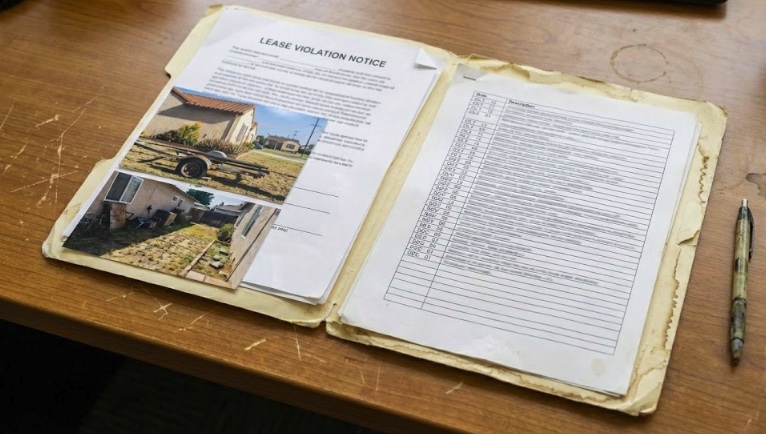
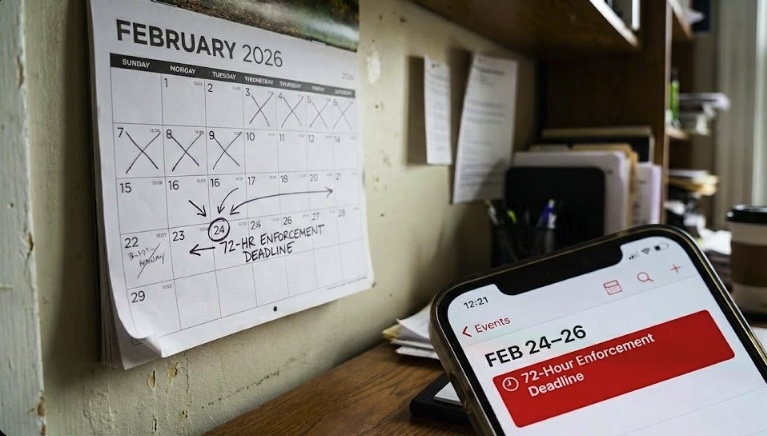
If a lease violation is not documented in writing within 72 hours of discovery, the owner has elected tolerance over enforceability.
Enforcement Timing & Control Standard (72-Hour Rule)
After the 72-hour window, enforcement shifts from controlled escalation to reactive damage control.
| Event | Required Action | Control Window | Risk if Missed | Enforcement Impact |
|---|---|---|---|---|
| Violation observed | Evidence captured | Immediate | Evidence degrades | Disputed facts |
| Documentation created | Written record logged | ≤ 72 hours | Timeline ambiguity | Weak notice |
| Notice eligibility check | Routing decision made | ≤ 72 hours | Misclassification | Invalid escalation |
| Notice service | Lawful service recorded | First eligible day | Delay compounds | Lost leverage |
Lease Violation Taxonomy: Curable vs. Non-Curable
Effective enforcement depends on routing the violation to the correct notice class immediately. Misrouting violations is a primary cause of failed enforcement.
This strict routing is critical across diverse housing stock, whether managing single-family homes in Mission Valley, multi-unit complexes in Chula Vista, or portfolios in El Cajon.

| Violation Type | Evidence Required | Notice Class | Escalation Trigger |
|---|---|---|---|
| Unauthorized occupant | Photos, witness log, lease clause | Curable notice | Failure to cure |
| Unauthorized pet | Photos, lease clause | Curable notice | Repeat violation |
| Noise / nuisance | HOA letter, police log | Curable notice | Continued disturbance |
| Maintenance neglect | Vendor report, photos | Curable notice | No corrective action |
| Criminal activity | Police report | Non-curable notice | Immediate |
| Severe safety hazard | Inspector report | Non-curable notice | Immediate |
What Qualifies as Enforceable Evidence
A violation is enforceable only if objective, reproducible evidence exists. In San Diego County, professional managers most commonly rely on:
- Date-stamped photos or video
- HOA violation letters or hearing notices
- Police or municipal call logs
- Vendor, inspector, or contractor reports
- Written witness statements
- Lease excerpts identifying the breached clause
Severity is secondary. Documentation is decisive.

Why Verbal Warnings Fail (Mechanically)
Verbal warnings carry no evidentiary weight and actively undermine later notice service. They create three predictable failures:
- No provable start date: Prevents clean cure-period tracking.
- Selective-enforcement exposure: Invites retaliation or fairness defenses.
- Notice-eligibility erosion: Delays or invalidates lawful escalation.
Once tolerance is shown, tenants expect repetition. Enforcement credibility collapses.
Written Enforcement vs. Verbal Warnings
Tenants adapt to consistency. They exploit tolerance.
| Dimension | Written Enforcement | Verbal Warnings |
|---|---|---|
| Documentation | Timestamped record | None |
| Evidence | Preserved | Lost |
| Notice eligibility | Protected | Delayed |
| Legal defensibility | High | Weak |
| Tenant behavior | Predictable | Exploitative |
| Owner risk | Controlled | Compounding |
Written Enforcement: The Professional Standard
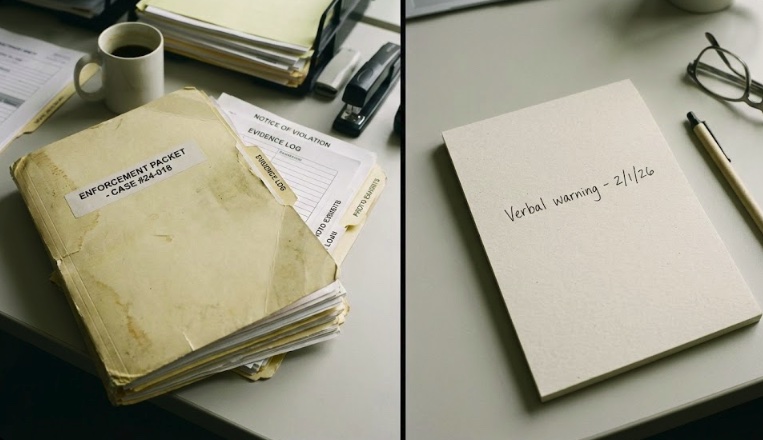
Written enforcement preserves legal options by creating a complete, timestamped violation record. Professional managers require:
- Immediate documentation tied to a lease clause
- Centralized evidence storage
- Documented service method and date
- Calendar-based escalation
All records are preserved as a single exportable enforcement packet suitable for owner review, counsel, or court scrutiny.
Diagnostic Tool: The 72-Hour Enforcement Audit
- ☐ Evidence Lock: Was photo/video evidence secured within 24 hours of discovery?
- ☐ Lease Correlation: Is the specific lease clause (e.g., Section 14, Paragraph B) cited in the file?
- ☐ Notice Generation: Was a formal written notice (Cure or Quit / Warning) drafted within 72 hours?
- ☐ Service Verification: Was the notice served in accordance with Civil Code procedure?
- ☐ Timeline Trigger: Is the expiration date for the cure period calendared?
If unchecked, the process is leaking leverage.
Cure-or-Quit Notices: Operational Use in California
Cure-or-quit notices are escalation instruments, not warnings. They are served only after documentation, evidence capture, and notice eligibility are confirmed. Partial cures or repeat violations are treated as new enforcement events—not improvement.
Why Civil Code § 1946.2 Changes Enforcement Strategy
Restricted termination statutes make early enforcement discipline non-optional. Civil Code § 1946.2 limits termination pathways in covered jurisdictions. With fewer lawful termination pathways available, early tolerance becomes disproportionately expensive. Written enforcement is the only scalable control that preserves remaining statutory options.
Key Takeaways
- Lease enforcement is an evidence and timing discipline
- Verbal tolerance destroys notice leverage
- Proper notice routing is critical
- Written records preserve statutory options
- Consistency protects asset value
Summary
Property managers enforce lease violations through written systems, not conversations. In San Diego County’s regulatory environment, verbal warnings are operationally reckless and legally corrosive. Written enforcement preserves evidence, timing, and lawful escalation—while tolerance quietly transfers control to the tenant.
Related Enforcement Articles
- Habitual Late Payers: The 3-Day Notice Strategy
Learn why accepting partial rent destroys your eviction case in San Diego courts. - AB 1482 Guide: Is Your Property Exempt?
How state rent caps impact your ability to terminate tenancy for lease violations. - Unauthorized Pets vs. ESAs: An Enforcement Guide
Distinguishing between lease violations and fair housing accommodations.
About the Author
Scott Engle is the Broker/Owner of Realty Management Group (Broker DRE #01332676 | Corp DRE #02075336). He has overseen more than 1,000 California rental transactions and specializes in enforcement systems that protect owner leverage, maintain compliance, and preserve asset value for San Diego County property owners.