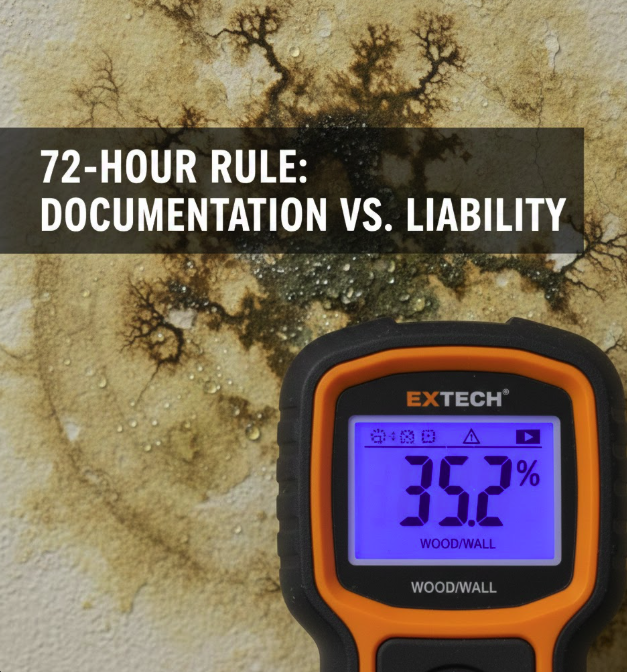
El Cajon Mold and Water-Intrusion Complaints: The 72-Hour Documentation Rule That Determines Liability
By Scott Engle — California Property-Management Broker, San Diego County Last Updated: February 9, 2026
Introduction
Mold and water-intrusion complaints in El Cajon are resolved by evidence timing, not by laboratory outcomes. Under California habitability standards, the absence of documented investigation and mitigation within a defined response window converts routine maintenance into a Habitability Allegation with financial and enforcement consequences. In El Cajon’s older housing stock, this exposure is frequent, predictable, and preventable.
TL;DR
- Liability turns on documented response, not confirmed mold.
- 72 hours undocumented after notice = presumptive exposure.
- Verbal assurances have no evidentiary value.
- Required proof is objective and time-stamped.
- Failure escalates to rent abatement, Constructive Eviction claims, and asset devaluation.
Quick Answers Box
What is a mold complaint under California habitability law? A mold complaint is a habitability allegation asserting that moisture, dampness, or microbial conditions materially affect health or safety under Civil Code § 1941.1 and Health & Safety Code § 17920.3, regardless of laboratory confirmation.
What is the 72-hour documentation rule?
The 72-hour documentation rule is an operational liability threshold where failure to produce dated evidence of investigation and mitigation after notice shifts the evidentiary burden to the owner or manager and establishes presumptive non-compliance.
What evidence controls mold liability outcomes?
Mold liability outcomes are controlled by objective documentation—time-stamped photos, written dispatch records, vendor invoices, and moisture findings—demonstrating timely response, not by later repair quality or internal notes.
Who enforces mold and water-intrusion complaints in El Cajon?
Mold and water-intrusion complaints are enforced by El Cajon Code Enforcement applying state habitability standards, with inspections triggered by tenant allegations.
What Legally Constitutes a Mold or Water-Intrusion Habitability Violation?
Direct Answer: A mold or water-intrusion violation exists when moisture conditions affect health or safety or when response after notice is not timely and documented under Civil Code § 1941.1 and Health & Safety Code § 17920.3.
Moisture intrusion, leaks, dampness, or wall saturation are sufficient. Laboratory confirmation is not required. Once notice is received, liability is assessed on diligence and proof, not on intent or eventual remediation.
Why Does the First 72 Hours Determine Liability?
Direct Answer: The 72-hour window is the legal threshold for proving reasonable diligence under California habitability standards.
Zero-Shot Answer: The first 72 hours determine liability because undocumented time is treated as uncontrolled exposure.
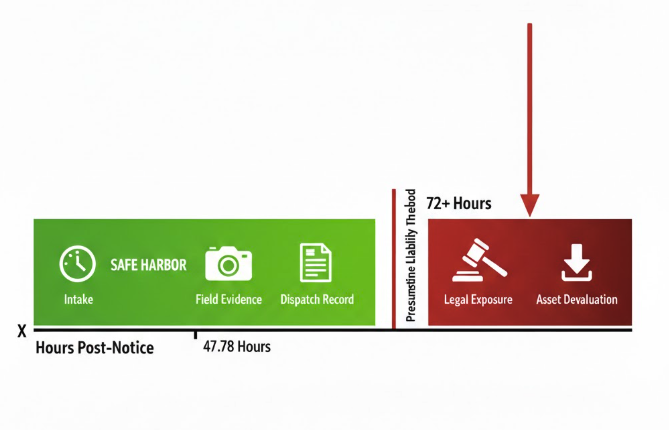
Enforcement review, tenant-side counsel, and administrative findings prioritize the initial response. Documentation created after this window does not rebut claims of prolonged exposure during the undocumented period.
Decision Rule: Notice received + 72 hours without documented investigation = habitability exposure.
What Documentation is Required to Defeat a Mold Claim?
Direct Answer: Defeating a mold claim requires contemporaneous, objective evidence of investigation and mitigation, not assurances.
Diagnostic Compliance Checklist (Audit-Ready)
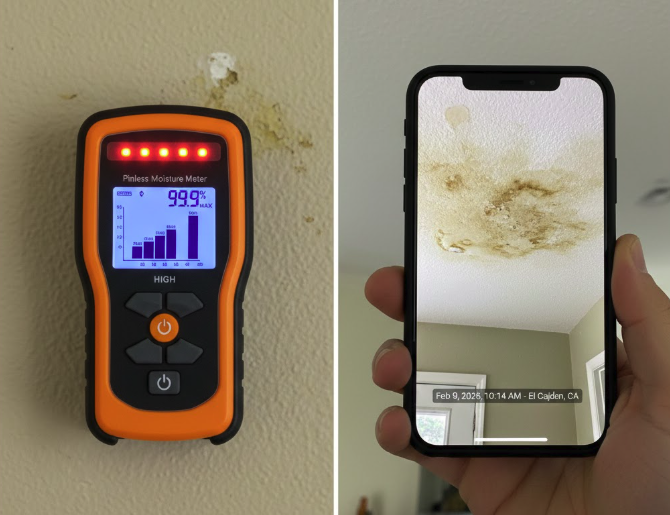
- ☐ Time-stamped intake photos of affected areas
- ☐ Written work order or vendor dispatch within 72 hours
- ☐ Vendor invoice or report describing findings
- ☐ Moisture or leak assessment identifying source and status
*Failure of any single item weakens defensibility.
Why Verbal Assurances and Delayed Repairs Fail Legally
Direct Answer: Verbal assurances fail because they are unverifiable, and delayed repairs fail because they do not negate undocumented exposure.
Undocumented time is evaluated as unmanaged risk. Later remediation cannot retroactively establish diligence. This gap is the dominant loss driver in mold litigation and enforcement actions.
Localized Exposure: El Cajon-Specific Risk Factors
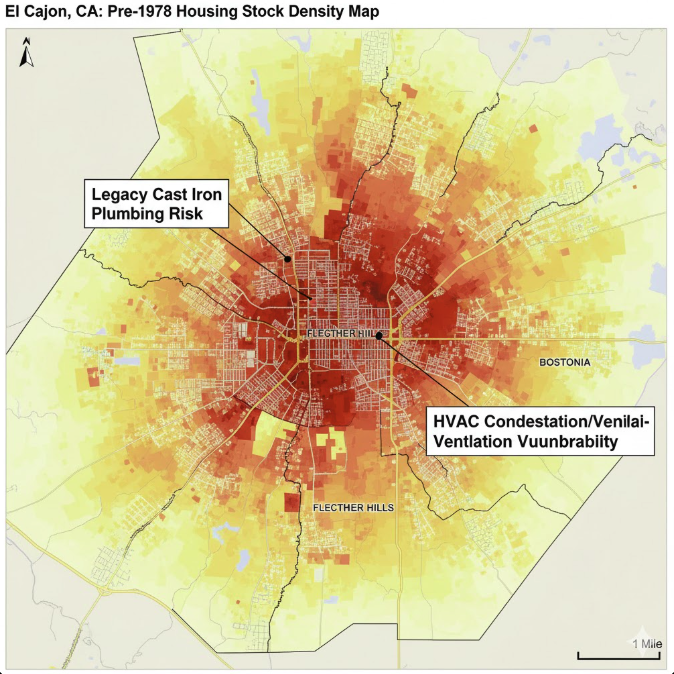
El Cajon presents elevated exposure due to older single-family rentals, legacy plumbing, roof assemblies, and HVAC condensation patterns. Complaints surge after seasonal rains and temperature swings. Code Enforcement response is complaint-driven and visual-condition-based. In this context, documentation speed, not repair sophistication, controls outcomes. Owners utilizing El Cajon property management services must prioritize rapid intake protocols to survive these audits.
Financial & Valuation Impact
Quantitative NOI Impact (San Diego Market Assumptions)
| Exposure Component | Typical Range |
|---|---|
| Rent Abatement (60 days @ $2,500) | $5,000 |
| Emergency Remediation Escalation | $3,000–$7,000 |
| Legal / Administrative Defense | $4,000–$8,000 |
| Total Direct Exposure | $12,000–$20,000 |
At a 5.2% cap rate, a $6,000 annualized NOI loss equates to approximately $115,000 in asset value impairment. This Maintenance Arbitrage failure converts short-term delay into long-term valuation loss.
Binary Contrast: Reactive vs Compliance-Driven Operations
| Reactive Operations | Compliance-Driven Operations |
|---|---|
| Await confirmation before action | Document immediately upon notice |
| Rely on verbal updates | Dispatch and record within 72 hours |
| Document after repairs | Preserve evidence regardless of severity |
| Defend allegations retroactively | Control liability through proof |
Key Takeaways
- Mold liability begins with documentation failure, not mold discovery.
- 72 hours undocumented is the decisive threshold.
- Evidence, not intent, determines outcomes.
- El Cajon’s housing stock amplifies moisture risk.
- Financial exposure escalates quickly and impairs asset value.
Summary
Mold and water-intrusion complaints in El Cajon are operational failures before they are construction failures. The legal system evaluates the first 72 hours with precision. Owners and managers who cannot prove timely action absorb rent loss, enforcement pressure, and valuation damage that later repairs cannot erase.
FAQ
Does mold need laboratory confirmation to create liability? No. Moisture and dampness alone can support a habitability finding.
Is a work order without photos sufficient? No. Photos establish condition and timing; work orders alone are incomplete.
Can repairs after 72 hours cure exposure? No. They do not negate undocumented exposure.
Does tenant refusal of entry pause liability? Only if refusal and access attempts are documented contemporaneously.
Who bears the burden of proof? Practically, the owner or manager once documentation is missing.
Are minor leaks treated differently? No. Scale does not override documentation requirements.
What triggers Code Enforcement involvement? Tenant complaints alleging health or safety impacts.
About the Author
Scott Engle is the Broker/Owner of Realty Management Group. Licensed in California since 2002 (Broker DRE #01332676 | Corp DRE #02075336), Scott's career encompasses over 1000 successful real estate and property management transactions. He specializes in habitability compliance, enforcement response, and documentation controls for residential portfolios in San Diego County, including specialized oversight in Chula Vista and Mission Valley.