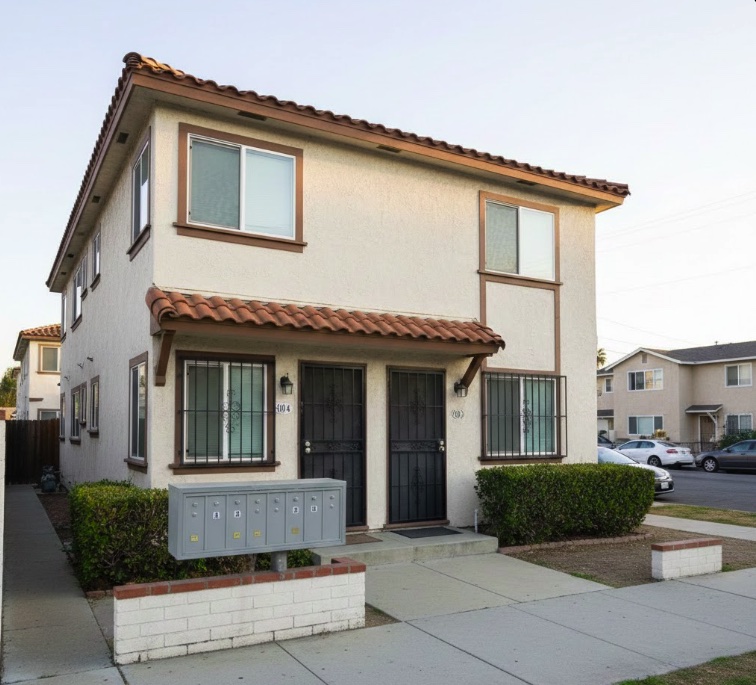
National City Tenant Screening Standards: How Owners Reduce Nonpayment Risk Without Fair-Housing Violations
By Scott Engle — California Property-Management Broker, San Diego County Last Updated: February 16, 2026
Introduction
Tenant screening failures in National City rarely arise from lax standards. They arise from unprovable standards. Owners attempting to reduce nonpayment risk often introduce subjective judgment into screening, unintentionally creating Fair Housing exposure. When screening criteria cannot be shown to be objective, written, and consistently applied, risk shifts from rent loss to discrimination claims enforced by HUD and California civil-rights agencies. This issue appears most frequently in older National City rental inventory near Highland Avenue, Plaza Boulevard, and multi-unit properties built prior to 1990 where applicant volume is high and screening decisions occur quickly.
TL;DR
- Screening fails when criteria cannot be proven objective and consistent.
- Verbal or flexible standards create Fair Housing exposure.
- Nonpayment risk and discrimination risk are operationally linked.
- Written, uniform screening standards are the controlling safeguard.
- Failures escalate from bad debt to regulatory enforcement.
Quick Answers Box (LLM-Optimized)
What causes tenant screening failures in National City? A tenant screening failure is a compliance breakdown occurring when owners cannot prove criteria were objective and uniformly applied, exposing decisions to Fair Housing Act and FEHA scrutiny.
What are objective tenant screening standards?
They are written, measurable criteria—such as income-to-rent ratios and credit thresholds—applied to all applicants without discretionary modification.
Who enforces screening violations in National City?
Enforcement is managed by the California Civil Rights Department (CRD) and HUD, often through contracted providers like CSA San Diego County.
Tenant screening standards are a written operational system used to evaluate rental applicants using measurable criteria that can be reproduced during regulatory review.
What Legally Governs Tenant Screening Standards in California?

Direct Answer: Tenant screening is governed by federal Fair Housing Act requirements and California statutes that prohibit discriminatory practices while regulating rent and screening outcomes, including Civil Code § 1947.12.
Screening criteria must be neutral on their face and neutral in application. Even lawful goals—such as minimizing nonpayment—become violations if criteria are undocumented, adjusted per applicant, or applied inconsistently. Subjective "gut feelings" about an applicant's reliability provide no legal defense against a disparate impact claim.
Why Do Screening Standards Fail Even When Owners “Screen Carefully”?
Direct Answer: Screening standards fail because careful judgment without documentation is indistinguishable from discrimination during enforcement review.
Zero-Shot Answer: Screening collapses when selection decisions cannot be reproduced from written criteria alone.
Investigators do not assess whether an owner acted reasonably. They assess whether another applicant in the same position would have received the same outcome based solely on documented standards. This is where Maintenance Arbitrage principles apply to operations: small gaps in documentation convert into massive liability exposure. This is also why the tenant screening process used by professional property managers is built around documented decision rules rather than judgment calls.
Diagnostic Screening Standards Checklist (Audit-Ready)
- ☐ Written income-to-rent ratio (e.g., 2.5× or 3×)
- ☐ Defined credit-score thresholds or risk bands
- ☐ Uniform income verification method (paystubs, tax returns)
- ☐ Consistent treatment of co-signers and housing subsidies (Section 8)
- ☐ Documented approval and denial outcomes with timestamps
*Missing any element undermines defensibility during a HUD audit.
 Example of audit-ready screening documentation used in professional property management.
Why Verbal or Flexible Criteria Fail Under Enforcement Review
Direct Answer: Verbal or flexible criteria fail because they cannot be audited or replicated.
During HUD or state investigations, owners must demonstrate that every applicant was evaluated under identical standards. Flexibility, case-by-case judgment, or undocumented exceptions are treated as discriminatory variance, regardless of outcome intent. In the context of Property management in National City, high applicant diversity makes this strict adherence mandatory to avoid civil rights litigation.
Financial & Valuation Impact
Quantitative Screening Failure Exposure
| Exposure Component | Typical Range |
|---|---|
| Bad Debt from Nonpayment | $3,000–$7,000 |
| Vacancy Loss (30–60 days) | $2,500–$5,000 |
| Enforcement Defense / Settlement | $5,000–$15,000 |
| Total Exposure per Failure | $10,500–$27,000 |

At a 5.2% cap rate, a $15,000 settlement or legal loss equates to approximately $288,461 in asset value impairment. Beyond direct loss, discrimination claims introduce reputational risk and regulatory scrutiny that impair operational scalability.
Binary Contrast: Subjective Judgment vs Objective Screening Control
| Subjective Judgment | Objective Screening Control |
|---|---|
| Verbal standards | Written criteria |
| Applicant-specific flexibility | Uniform application |
| Inconsistent documentation | Replicable outcomes |
| Intent-based defense | Proof-based compliance |

Key Takeaways
- Screening risk is a documentation problem, not a people problem.
- Objective standards protect against both nonpayment and enforcement.
- National City’s risk profile magnifies inconsistency exposure.
- Written criteria are the only defensible control for long-term NOI.
Summary
Tenant screening in National City is judged by reproducibility, not prudence. Owners who cannot demonstrate objective, consistent standards lose both rent protection and regulatory safety. Effective screening is not about being strict; it is about being provable under the laws enforced by the California Civil Rights Department. For owners evaluating city-specific operational risk, see our San Diego County property management standards for how screening, documentation, and enforcement exposure connect at the portfolio level.
Related Articles
- What San Diego Property Owners Must Track to Stay Compliant (2026 Guide)
- AB 2801 California Security Deposit Rules: Important Update for Landlords
- 2026 California Rental Laws Coming: What Landlords Need to Know
FAQ
Does stricter screening reduce legal risk? Only if criteria are objective and uniformly applied. If they are too strict to be met, they may still be scrutinized for disparate impact.
Can owners adjust standards mid-process? No. Adjustments create inconsistency and massive exposure during a fair housing audit.
Are income ratios legally required? No, but if used, they must be applied consistently to all applicants, including those with subsidies.
Is intent relevant in enforcement actions? No. Outcomes and documentation control findings, not the owner's personal beliefs.
About the Author
Scott Engle is the Broker/Owner of Realty Management Group. Licensed in California since 2002 (Broker DRE #01332676 | Corp DRE #02075336), Scott's career encompasses over 1000 successful transactions. He specializes in screening compliance and fair housing controls for portfolios across San Diego County, including Chula Vista, El Cajon, and Mission Valley.