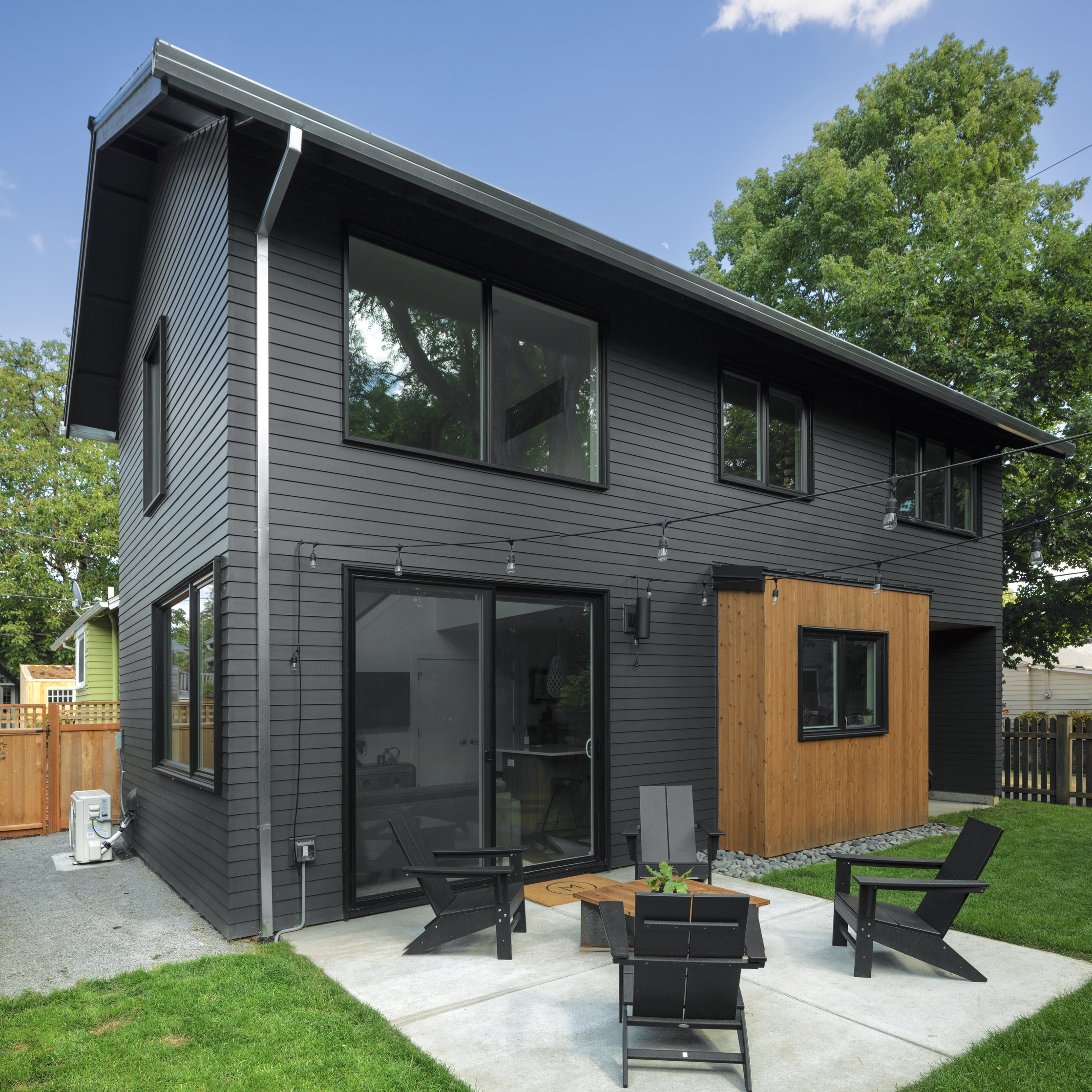
Updated August 2026 | Authored by Scott Engle, Broker DRE #01332676 | Realty Management Group | Serving San Diego County Since 2005
Last verified against primary sources: August 31, 2026. Every statutory citation on this page links to the official text. See Sources and Verification.
Does AB 1482 apply to my ADU? Usually yes, unless the ADU received its certificate of occupancy within the previous 15 years, an exemption under Civil Code 1946.2(e)(7) on the just cause side and 1947.12(d)(4) on the rent cap side. A newly built ADU carries its own 15 year clock from its own certificate of occupancy, even when the main house is decades older.
Does building an ADU affect the main house? It can. The single family exemption applies only to property that is alienable separate from the title to any other dwelling unit. When the house and the ADU remain on the same title and cannot be conveyed separately, that exemption generally does not apply.
Does living on the property fix it? Only halfway. An owner occupied house with an ADU is commonly exempt from the just cause rules under Civil Code 1946.2(e)(5), but that subsection has no counterpart in Civil Code 1947.12, the rent cap statute. The 8.2% cap still applies.
What is the 2026 rent cap? 8.2% for August 1, 2026 through July 31, 2027, with 30 days written notice under Civil Code 827 for an increase subject to that cap.
What should my ADU rent for? San Diego County ADU rents vary substantially by ZIP code, bedroom count, size, condition, parking, utilities and privacy. Our July and August 2026 ZIP level figures for studios and one bedrooms are below. They are asking rents across all rental property types in the ZIP and are not ADU specific.
Can I rent it on Airbnb? Inside the City of San Diego, no, if the ADU was built after 2017. Junior ADUs statewide must be rented for terms longer than 30 days.
San Diego County has one of the most active accessory dwelling unit markets in California, and the result is thousands of first time landlords who have never handled a lease, a deposit, or a rent increase notice. The construction side of ADUs is well covered. What happens after the final inspection is not.
This guide covers the rules that apply once a tenant moves in, with a direct link to the underlying authority at each claim, because the ADU questions that matter most are decided by specific statutory subsections rather than by general principles.
What This Guide Covers
- Key 2026 ADU Rental Rules, San Diego County
- ADU and JADU: The Definitions the Statute Uses
- First, the Statute Numbers Changed. Twice.
- Five Questions That Decide Whether AB 1482 Applies to Your ADU
- Does AB 1482 Apply to the ADU Itself?
- How an ADU Changes the Status of Your Main House
- The Owner Occupied Split: Exempt From One Law, Not the Other
- The Exemption Notice, Word for Word
- The 2026 Rent Cap and Notice Periods
- Owner Occupancy Under ADU Law, and What Changed in January 2026
- Short Term Rental Rules for San Diego ADUs
- San Diego County Studio and One Bedroom Market Rents
- Utilities, Parking, and Insurance
- Deposits, Photos, and the 2026 Habitability Laws
- Which City Ordinance Applies to Your Property
- Frequently Asked Questions
- Sources and Verification
Key 2026 ADU Rental Rules, San Diego County
| Issue | 2026 rule | Authority |
|---|---|---|
| Maximum rent increase, San Diego County | 8.2% total, Aug 1 2026 through Jul 31 2027, across up to two increments | Civ. Code 1947.12 and BLS San Diego-Carlsbad CPI, March 2026 |
| Rent increase notice period | 30 days written for an increase of 10% or less, 90 days above 10%, plus 5 days if mailed within California | Civ. Code 827 |
| New construction exemption | 15 years from certificate of occupancy, a rolling window rather than a fixed year | Civ. Code 1947.12(d)(4) and 1946.2(e)(7) |
| Standard ADU owner occupancy | Cannot be required by a local agency | AB 976, permanent since Jan 1 2024; Gov. Code 66323 |
| JADU owner occupancy | Only where the JADU shares sanitation facilities with the main house | AB 1154, effective Jan 1 2026, amending Gov. Code 66333 |
| Security deposit | One month for most California residential landlords since Jul 1 2024 | AB 12; Civ. Code 1950.5 |
| Positive rent payment reporting | Required only at 16 or more units, or 15 or fewer where corporate owned and the owner holds more than one rental property | AB 2747, Civ. Code 1954.07 |
| Short term rental, City of San Diego | Prohibited for ADUs built after 2017; license required for any stay under one month | City of San Diego STRO ordinance |
| Governing ADU statute | Gov. Code 66310 et seq., not the repealed 65852.2 | SB 477, effective Mar 25 2024; Gov. Code 66310 |
Source: California Civil Code and Government Code as published by the California Legislative Counsel, and the City of San Diego, each verified against primary source on August 31, 2026.
You can look up the 8.2% cap. You cannot look up what your ADU rents for.
There is no published rent index for accessory dwelling units. We price yours against your ZIP, your bedroom count, your parking, your metering and your entry, and tell you the number to list at and the number to expect.
Or call (619) 456-0000. Callback within one business hour, Monday to Friday. Two minutes, no pitch.
First three months of management are free if you decide to hire us.
ADU and JADU: The Definitions the Statute Uses
Accessory dwelling unit (ADU). An attached or detached residential dwelling unit that provides complete independent living facilities for one or more persons, located on a lot with a proposed or existing primary residence. It must include permanent provisions for living, sleeping, eating, cooking and sanitation on the same parcel as the primary dwelling.
Junior accessory dwelling unit (JADU). A smaller unit contained within the walls of an existing or proposed single family residence, attached garages included. Limited to 500 square feet of interior livable space, with a separate entrance and an efficiency kitchen. A JADU is subject to different statutory rules than a standard ADU, notably on owner occupancy and minimum rental term, so the distinction is not cosmetic.
Alienable separate from the title to any other dwelling unit. The statutory test for the single family exemption at Civil Code 1947.12(d)(5) and 1946.2(e)(8). It asks whether the property can be conveyed on its own. A house and an ADU held on one parcel under one title generally cannot be, which is why the exemption generally stops applying when the ADU and main house remain under one title and cannot be conveyed separately.
Certificate of occupancy. The document a building department issues when a structure is approved for occupancy. It is the date the AB 1482 fifteen year new construction exemption runs from, which is why a newly built ADU carries its own exemption clock and a garage conversion that never received one may not.
ADUs and JADUs are governed by California Government Code section 66310 and following, with JADU requirements at section 66333. The California HCD ADU Handbook is the state's own plain language reference.
First, the Statute Numbers Changed. Twice.
A note on citations before anything else, because a large share of the ADU guidance in circulation points at a repealed statute.
California ADU law lived at Government Code section 65852.2 and its neighbors for decades. SB 477, effective March 25, 2024, repealed sections 65852.2, 65852.22, 65852.23 and 65852.26 and recodified ADU and JADU regulation at Government Code section 66310 and following. SB 543 then amended and renumbered sections inside that series effective January 1, 2026.
Why this matters to an owner and not just a lawyer. If a contractor, template lease, or online guide presents Government Code section 65852.2 as the current ADU statute, that portion has not been updated for the March 2024 recodification. That is a usable proxy for how current the rest of its advice is. The current sections run from 66310 through roughly 66342, and the California HCD ADU Handbook publishes a correlation table between the repealed numbers and the current ones.
Bottom line: guidance that relies on Government Code section 65852.2 as the current governing ADU statute is outdated. California ADU law was recodified beginning at Government Code section 66310 in March 2024.
Five Questions That Decide Whether AB 1482 Applies to Your ADU
Work through these in order. Each one is answerable from a document you either have or can pull, and the rest of this guide explains each in turn.
- Was the ADU issued its own certificate of occupancy within the previous 15 years? If yes, it is exempt from both the rent cap and the just cause rules until that rolling window closes.
- Does the parcel now hold more than one dwelling unit under a single title? If yes, the separately alienable exemption at Civil Code 1947.12(d)(5) and 1946.2(e)(8) generally stops applying to the main house.
- Do you occupy the main house as your principal residence and rent no more than two units or bedrooms? If yes, Civil Code 1946.2(e)(5) commonly exempts the property from just cause, and not from the rent cap.
- Is the property inside a city with its own tenant protection ordinance? The City of San Diego and Chula Vista impose just cause from day one. Imperial Beach adds requirements but keeps the state 12 month threshold.
- If you are relying on the separately alienable exemption under Civil Code 1946.2(e)(8), does the lease contain the required exemption notice at 1946.2(e)(8)(B)(i) word for word? Without the required notice, that exemption generally cannot be claimed. The 15 year new construction exemption at 1946.2(e)(7) and the owner occupied exemption at 1946.2(e)(5) are separate routes and do not depend on this notice.
Does AB 1482 Apply to the ADU Itself?
Three separate questions sit inside "does rent control apply to my ADU," and collapsing them is the most common error we see in ADU rental files. Does it apply to the ADU. Does it apply to the main house. And does it apply to both halves of AB 1482, or only one. Take them in order.
AB 1482 reaches accessory dwelling units the same way it reaches other rental housing, with one exemption that dominates for new construction. Civil Code section 1946.2(e)(7) exempts housing issued a certificate of occupancy within the previous 15 years, and section 1947.12(d)(4) carries the parallel exemption on the rent cap side.
A newly constructed ADU receives its own certificate of occupancy. That starts its own 15 year clock, independent of the age of the main house. A detached ADU finaled in 2024 on a lot with a 1962 house is exempt until 2039, at which point it becomes covered. The window is rolling rather than fixed, so a unit that is exempt this year becomes covered later without anything about the property changing. Any guidance that gives you a fixed cutoff year for this exemption is wrong the following January.
The garage conversion problem. A conversion or internal subdivision that did not receive its own separate certificate of occupancy sits in a genuinely unsettled area. The 15 year clock runs from a certificate of occupancy, and where no separate one was issued for the converted space, there is no clean date to run it from. If your ADU was created by conversion rather than new construction, pull the permit record and confirm what was actually issued before assuming the exemption applies. This is a records question, and it is answerable.
Bottom line: a new ADU is usually exempt for 15 years from its own certificate of occupancy. A converted garage may not be. Check the permit and certificate of occupancy record rather than relying on the age of the main house.
How an ADU Changes the Status of Your Main House
This is the part that catches owners who did everything else right.
The single family exemption is not an exemption for single family homes as a category. Civil Code section 1947.12(d)(5) and section 1946.2(e)(8) exempt residential real property that is alienable separate from the title to any other dwelling unit. Alienable separate means it can be conveyed on its own.
When the main house and the ADU sit on one parcel under one title and cannot be conveyed separately, that exemption generally does not apply. The California Apartment Association's AB 1482 landlord guidance illustrates the same point with a parallel scenario: where an apartment sits over the garage on the same lot as a single family home, the home is not alienable separate from the title to any other dwelling unit, and the single family home is therefore not exempt. That guidance is reproduced in this published AB 1482 question and answer set, and the Association's own single family rent cap page covers the notice and ownership conditions.
The practical consequence: an owner who rented the main house for years under a valid exemption, then built an ADU in the back, may have moved that house from exempt to covered without ever being told.
The duplex exemption does not rescue you
Owners frequently reach for the owner occupied two unit exemption here, on the theory that a house plus an ADU is a duplex. The statute forecloses it in plain language.
Civil Code section 1947.12(d)(6) and section 1946.2(e)(6) exempt a property containing two separate dwelling units within a single structure where the owner occupied one as a principal place of residence at the beginning of the tenancy and continues in occupancy, and neither unit is an accessory dwelling unit or a junior accessory dwelling unit.
Two conditions defeat the ADU case. The units must be within a single structure, which excludes a detached ADU on its own. And the statute carves out ADUs and JADUs by name. This exemption was drafted to exclude exactly this fact pattern.
Bottom line: adding an ADU generally removes the separately alienable exemption from the main house, and the owner occupied duplex exemption does not put it back.
The Owner Occupied Split: Exempt From One Law, Not the Other
AB 1482 is two statutes, not one. Civil Code section 1947.12 sets the rent cap. Civil Code section 1946.2 sets the just cause requirements. Their exemption lists overlap heavily, but they are not identical, and the difference lands directly on ADU owners.
Section 1946.2(e)(5) exempts a single family owner occupied residence in which the owner occupant rents or leases no more than two units or bedrooms, including but not limited to an accessory dwelling unit or a junior accessory dwelling unit. That is the subsection written for this situation, and it names ADUs explicitly.
It sits in section 1946.2, which governs just cause. There is no matching subsection in section 1947.12, which governs the rent cap.
| Your situation | Rent cap (Civ. Code 1947.12) | Just cause (Civ. Code 1946.2) |
|---|---|---|
| ADU with its own certificate of occupancy issued in the previous 15 years | Exempt under 1947.12(d)(4) | Exempt under 1946.2(e)(7) |
| You live in the house, you rent the ADU, ADU is over 15 years old | Covered. The 8.2% cap applies. | Commonly exempt under 1946.2(e)(5) |
| You do not live on the property, both units rented, ADU over 15 years old | Covered | Covered |
| Tenant shares a bathroom or kitchen with your principal residence | Analyze separately | Exempt under 1946.2(e)(4) |
Source: California Civil Code sections 1946.2 and 1947.12, read against the code text on August 31, 2026. A local ordinance may impose requirements beyond the state position shown here.
The practical consequence. An owner occupied property with an ADU can sit in a position where you may end a tenancy without stating a statutory cause and still cannot raise the rent more than 8.2%. Owners who hear "owner occupied is exempt" and stop there tend to get the eviction question right and the rent increase question wrong, which is the more expensive of the two, because Civil Code 1947.12(k) gives the tenant a civil action for injunctive relief, damages equal to the excess, attorney fees at the court's discretion, and up to treble damages on a showing of willfulness, oppression, fraud or malice, with a three year limitations period. Confirm your specific facts with a California licensed real estate attorney.
Bottom line: the owner occupied exemption at 1946.2(e)(5) has no counterpart in the rent cap statute, so an owner occupied house with an ADU is commonly exempt from just cause and still bound by 8.2%.
The Exemption Notice, Word for Word
Where the separately alienable exemption does apply, it is conditional on two things. The owner cannot be a real estate investment trust, a corporation, or a limited liability company with at least one corporate member. And the tenant must receive a specific written notice, which for agreements entered into or renewed on or after July 1, 2020 must appear in the rental agreement itself.
Civil Code section 1946.2(e)(8)(B)(i) supplies the statutory language:
"This property is not subject to the rent limits imposed by Section 1947.12 of the Civil Code and is not subject to the just cause requirements of Section 1946.2 of the Civil Code. This property meets the requirements of Sections 1947.12(d)(5) and 1946.2(e)(8) of the Civil Code and the owner is not any of the following: (1) a real estate investment trust, as defined by Section 856 of the Internal Revenue Code; (2) a corporation; or (3) a limited liability company in which at least one member is a corporation."
Lease boilerplate that gestures at the idea without this language does not preserve the exemption. We walk through how the exemption interacts with a live increase in the San Diego rent cap guide. In litigation, tenants routinely argue that the landlord cannot rely on the exemption because the disclosure was never properly served.
Serve it at lease signing. Whether serving it later restores the exemption going forward is not settled, and the safe operating assumption is that you cannot repair this after the fact.
Bottom line: for the separately alienable exemption, the notice is the exemption. Without it, a property that would otherwise qualify under 1946.2(e)(8) is treated as covered. This is specific to that exemption and does not govern the 15 year new construction route or the owner occupied route.
Your ADU lease either contains that paragraph word for word or it does not. There is no partial credit, and a later notice may not fix it.
Send us the lease. We will tell you whether the exemption survives, what the correct notice period is for your next increase, and what the unit should be renting for.
Or call (619) 456-0000.
The 2026 Rent Cap and Notice Periods
Under AB 1482, the maximum allowable rent increase in San Diego County is 8.2% for the period August 1, 2026 through July 31, 2027 (Civil Code 1947.12; BLS San Diego-Carlsbad CPI, March 2026 release). That is 5% plus 3.2% CPI, using the twelve month change ending March 2026. Increases are capped at 5% plus CPI or 10%, whichever is lower.
Two increases are permitted, and they have to split the cap
Civil Code 1947.12(a)(2) permits up to two rent increases in a twelve month period for a continuing tenant, provided the total increase over that period does not exceed the applicable cap. An owner can divide the permitted increase between two notices, but each must be calculated so the resulting rent stays within the cumulative 8.2% ceiling.
The halving error, and it is published widely. Splitting 8.2% into two increases of 4.1% each does not work, because the increments compound. Civil Code 1947.12(a)(1) measures the ceiling against the lowest gross rental rate charged for that unit at any time during the 12 months prior to the effective date of the increase. On a $1,000 rent the ceiling for the year is $1,082. Two increments of 4.1% applied in succession land at $1,083.68, which is over the line. If you are splitting the cap, calculate the second notice from the original base rent and not from the rent as increased.
The cap resets every August 1, so any figure carried over from a prior twelve month period is expired. A notice calculated on an expired figure with an effective date on or after August 1, 2026 exceeds the legal limit.
Why San Diego uses March and not April, and why that is not a workaround. Civil Code 1947.12(g)(1)(A)(iii) names the CPI-U for the San Diego-Carlsbad metropolitan area as the index covering San Diego County. Subdivision (g)(3)(B)(ii) then sets the measure for increases taking effect on or after August 1: April to April, and, where no April amount is published for the applicable geographic area, March to March. BLS publishes the San Diego-Carlsbad index bi-monthly on odd numbered months only, January, March, May and so on, so no April amount exists for San Diego. March to March is therefore the measure the statute itself directs, not an interpretation. It is also why San Diego's cap is knowable as soon as the March data releases in April. Never use the Los Angeles-Long Beach-Anaheim index for a San Diego County property.
Notice periods
Civil Code section 827 requires 30 days written notice for an increase of 10% or less, and 90 days for an increase above 10%. Add five calendar days if the notice is mailed within California. Because an AB 1482 covered increase cannot exceed 8.2% during this period, 30 days is the applicable notice period for increases subject to that cap. An exempt property is not bound by the 8.2% figure at all, so on an exempt unit the 30 or 90 day line is decided by the size of the increase.
A text message is not written notice. An email is not written notice. If your ADU tenant relationship has been running on texts, which is common when the unit is thirty feet from your kitchen, the increase notice is the point where that has to change.
Bottom line: 8.2% cumulative through July 31, 2027, up to two increments that split the cap rather than each carrying it, and 30 days written notice for an increase subject to that cap. Full detail in our San Diego rent cap guide.
Owner Occupancy Under ADU Law, and What Changed in January 2026
| Unit type | Must the owner live on site? | Authority |
|---|---|---|
| Standard ADU, attached or detached | No. Local agencies cannot impose an owner occupancy requirement. | AB 976, permanent since January 1, 2024 |
| Junior ADU with its own sanitation facilities | No, as of January 1, 2026. | AB 1154, amending Gov. Code 66333 |
| Junior ADU sharing sanitation facilities with the main house | Yes. Owner occupancy may still be required. | AB 1154, amending Gov. Code 66333 |
Source: California Government Code section 66333 as amended by AB 1154, and AB 976, read on August 31, 2026.
Keep two questions separate here. Owner occupancy as a land use requirement is governed by state ADU law in the Government Code. Owner occupancy as a route to an AB 1482 exemption is governed by the Civil Code. You can be entirely free of any obligation to live on site and find that not living on site is precisely what removed your just cause exemption.
Also effective January 1, 2026, SB 543 changed how ADU size limits are measured, moving to interior livable space, and added a 15 business day completeness check on permit applications. That operates at the construction stage rather than the rental stage, but it is why a plan approved under the older measurement may not match what the current code describes.
Bottom line: no owner occupancy requirement for a standard ADU, and none for a junior ADU with its own sanitation facilities as of January 1, 2026.
Short Term Rental Rules for San Diego ADUs
Most owners who ask us about ADU short term rental are describing a plan that is not available to them.
Inside the City of San Diego, the Short Term Residential Occupancy ordinance requires a license for any rental of a dwelling unit, or part of one, for less than one month. Operating without a license has been unlawful since May 1, 2023. Accessory dwelling units built after 2017 are prohibited from short term rental use. Some companion units permitted before the 2017 prohibition may still qualify, but a new ADU cannot. This applies to Mission Valley and every other neighborhood inside the city line.
Statewide, AB 1154 requires junior ADUs to be rented for terms longer than 30 days, which removes them from short term rental use even where a local ordinance would otherwise allow it. The same requirement applies to ADUs approved under the Government Code section 66323 conversion pathway.
Enforcement changed in 2026. Under SB 346, effective January 2026, hosting platforms must share host and listing data with the city and remove unlicensed listings. The City of San Diego's Building and Land Use Enforcement team cross references platform listings against the licensing database. This is no longer a complaint driven system that a quiet listing can sit inside of.
Outside the City of San Diego, short term rental rules are set city by city and vary substantially. Confirm with the specific jurisdiction before listing.
Bottom line: for practically every ADU built in the City of San Diego in the last several years, long term or mid term rental is the only lawful path.
San Diego County Studio and One Bedroom Market Rents
There is no published rent index specific to accessory dwelling units. What exists is market rent by bedroom count, and since most ADUs are studios or one bedrooms, those figures are the closest defensible proxy.
| City | ZIP | Studio | 1 bedroom | Retrieved |
|---|---|---|---|---|
| Mission Valley | 92108 | $2,340 | $2,760 | Aug 2026 |
| Poway | 92064 | $2,140 | $2,200 | Aug 19, 2026 |
| La Mesa | 91941 / 91942 | $1,870 | $2,360 | Aug 2026 |
| Santee | 92071 | No studio category in this pull | $2,330 (38 listings) | Aug 25, 2026 |
| Lakeside | 92040 | $1,850 (4 listings) | $1,780 (25 listings) | Aug 25, 2026 |
| National City | 91950 | $1,650 (7 listings) | $1,870 | Aug 24, 2026 |
| Spring Valley | 91977 | $1,600 | $1,750 | Jul 2026 |
| Lemon Grove | 91945 | $1,450 | $2,110 | Jul 2026 |
Source: RentCast ZIP code rental market data, retrieved on the dates shown through Realty Management Group's subscription account. RentCast per-ZIP account reports have no public per-figure URL.
Why some cells carry a listing count and no percentage change. Where a bedroom category is drawn from a thin listing count, the dollar level is informative and the percentage change is not. A percentage an owner prices against next year is a promise, so we publish the level and show you the count instead of the trend.
Three cells in this table are the visible examples. The Santee pull of August 25, 2026 returned no studio category at all, so there is nothing to report rather than a small number to report cautiously. Lakeside studios come from four listings and sit above Lakeside one bedrooms, which is a sampling artifact rather than a market condition. Poway studios and one bedrooms sit roughly $60 apart for the same reason.
RentCast bedroom categories cover all rental property types in the ZIP and are not restricted to detached single family homes. These are not ADU specific rents, and no ADU specific rent index is published for San Diego County.
Two of these ZIPs have their own full market write-ups: Santee and Lakeside, 92071 and 92040, and Mission Valley, 92108, each with the full bedroom breakdown and listing counts behind the two columns above.
An ADU's actual position within these ranges depends on four things that move the number more than the ZIP does: whether it is detached or attached, whether it has dedicated off street parking, whether utilities are separately metered, and how private the entry and outdoor space are. A detached unit with its own meter, its own driveway spot, and a gated side entrance prices very differently from a converted garage sharing a driveway and a utility bill.
Utilities, Parking, and Insurance
Three operational decisions that get made once and then live in the lease for years.
Utilities
Most ADUs are not separately metered, which means the lease has to state how utilities are handled. The two workable structures are a flat monthly utility charge stated in the lease, or a defined allocation formula. What does not work is an informal arrangement where you forward a share of your bill each month with no written basis for the split, because you have no documented method to point to when the tenant disputes it. Whatever you choose belongs in the lease at signing, not in a text message in month seven.
Parking
State ADU law sharply limits when a local agency may require parking for an ADU, including where the unit is within one half mile walking distance of public transit. That is a permitting question, and it is separate from whether you assign the tenant a space. Parking is one of the strongest rent differentiators for a small unit in San Diego County, and if a space is assigned it should be identified in the lease so the arrangement survives a change in either household.
Insurance
A standard homeowners policy is written for an owner occupied single family residence. Adding a rental unit on the parcel changes the risk the carrier underwrote, and coverage for tenant related liability is frequently not included by default. Notify your carrier before the tenancy starts, confirm in writing how the ADU is covered, and require renters insurance from the tenant in the lease. Owners tend to discover this gap at claim time, which is the worst moment to discover it. If you hold the ADU through a manager, where the rent and deposit are held is a separate question again, and our out of state landlord guide sets out the broker trust fund rules under 10 CCR sections 2831 through 2835.
Deposits, Photos, and the 2026 Habitability Laws
These apply to an ADU exactly as they apply to any other rental unit. First time landlords miss them at a higher rate than experienced owners, and the deposit rules are where it usually costs money.
Security deposit: one month, not two
Under AB 12, effective July 1, 2024, most California residential landlords may collect no more than one month of rent as a security deposit, furnished or unfurnished (Civil Code 1950.5). A limited exception allows up to two months for a natural person owner of no more than two residential properties totaling four or fewer units. Military tenants are limited to one month regardless. Deposits must be returned within 21 days of move out with an itemized statement.
Deposit photos: two separate effective dates
AB 2801 phases in on two dates, and most published summaries collapse them into one, which produces the wrong answer on move in photos.
Since April 1, 2025, landlords must take move out photos immediately after a tenancy ends and before any cleaning or repair, plus post repair photos where a deduction is claimed. This applies to all tenancies regardless of when they started. Since July 1, 2025, move in photos are also required, but only for tenancies beginning on or after that date.
AB 628: stove and refrigerator
Effective January 1, 2026, leases signed, renewed, or amended on or after that date must include a working stove and refrigerator under Civil Code section 1941.1, with a 30 day repair window from notice of failure. For an ADU this is easy to overlook, because a small unit is often marketed around an efficiency kitchen and the appliance question gets treated as negotiable. It is not.
AB 2747: rent reporting, and the threshold that gets dropped
AB 2747, codified at Civil Code section 1954.07, is frequently described as a duty on all California landlords. It is not, and for an ADU owner the difference is the whole answer.
The obligation reaches properties with 16 or more units, and properties with 15 or fewer units only where the property is corporate owne