Updated August 2026 | Authored by Scott Engle, Broker DRE #01332676 | Realty Management Group | Serving San Diego County Since 2005
Last verified against primary sources: August 25, 2026.
Quick Answer
What rules apply to a Mission Valley rental? Mission Valley is inside the City of San Diego, so two layers of rules apply. State law caps rent increases at 8.2% for August 1, 2026 through July 31, 2027 and requires just cause after twelve months of occupancy. For rentals covered by the San Diego ordinance, Municipal Code sections 98.0701 through 98.0709 require just cause from day one, a city-specific exemption notice, relocation assistance for a no-fault termination, and notice to the San Diego Housing Commission. The city has no local rent cap of its own, so the state 8.2% figure governs the increase.
What does a Mission Valley rental go for? The 92108 average across all unit types is $3,280 per month, down 1.2% year over year. Studio $2,340, one bedroom $2,760, two bedroom $3,510, three bedroom $4,810, four bedroom $5,420. RentCast, August 2026.
What does management cost here? RMG charges a flat $199 per month for one to three units at rents up to $5,000, which is $2,388 a year and does not move as the rent rises inside that range. Above $5,000 per month in rent the fee is 6%. Eight percent of the 92108 average is $262.40 a month, $3,148.80 a year. The gap is $760.80 in year one and $2,282.40 across a three year tenancy, and it widens with every rent increase because a percentage fee rises with the rent and a flat fee does not.
Can I raise the rent twice this year? Yes. Civil Code §1947.12(a)(2) permits up to two increments in a twelve month period for a continuing tenant, so long as the cumulative total stays inside the 8.2% cap. Guidance saying only one increase is permitted is wrong.
Mission Valley property management is unusually compliance-heavy, because a rental owner in ZIP 92108 answers to two sets of rules at once: California landlord-tenant law, and the City of San Diego's residential tenant protections ordinance. The most expensive mistake here is assuming the first one settles the second. It does not. The ordinance has its own exemption criteria and its own required notice, and the state exemption form does not satisfy either.
Mission Valley Property Management at a Glance
| Measure | Mission Valley / ZIP 92108 |
|---|---|
| Average rent, all unit types | $3,280 per month |
| 1 bedroom average | $2,760 per month |
| 2 bedroom average | $3,510 per month |
| 3 bedroom average | $4,810 per month |
| AB 1482 rent cap, Aug 1 2026 to Jul 31 2027 | 8.2%, being 5% plus 3.2% CPI |
| Increases permitted per 12 months | Up to two, cumulative total within the cap |
| Local just cause | Day one, under SDMC §§98.0701–98.0709 |
| Local rent cap | None. The state 8.2% figure governs. |
| Security deposit ceiling | One month for most landlords, Civil Code §1950.5 |
| RMG management fee | Flat $199 per month, 1 to 3 units; $179 per unit, 4 to 16 units; 6% of rent above $5,000 per month |
| RMG units managed in Mission Valley | 29 |
| RMG days from vacancy to signed lease | 6 |
Table 1. Mission Valley property management reference figures, ZIP 92108, August 2026. Rent figures from RentCast; statutory figures verified against California leginfo and the San Diego Municipal Code on August 25, 2026; RMG figures from internal Rentvine management data.
IS YOUR LEASE COMPLIANT?
Send it over and we will tell you where your Mission Valley property actually stands: covered, exempt, or exposed. We will price it against current 92108 comps while we are in there. Callback within one business hour, Monday to Friday. Two minutes, no pitch.
Have My Lease Reviewed Call (619) 456-0000First three months of management are free if you decide to hire us.
What This Guide Covers
- Mission Valley property management at a glance
- Mission Valley rents in 2026
- The San Diego tenant protection ordinance in Mission Valley
- The AB 1482 rent cap and how to calculate it
- Whether a Mission Valley condo is exempt
- State laws that changed for 2026
- What management costs at Mission Valley rent levels
- RMG results in Mission Valley
- Frequently asked questions
Mission Valley Rents in 2026: ZIP 92108
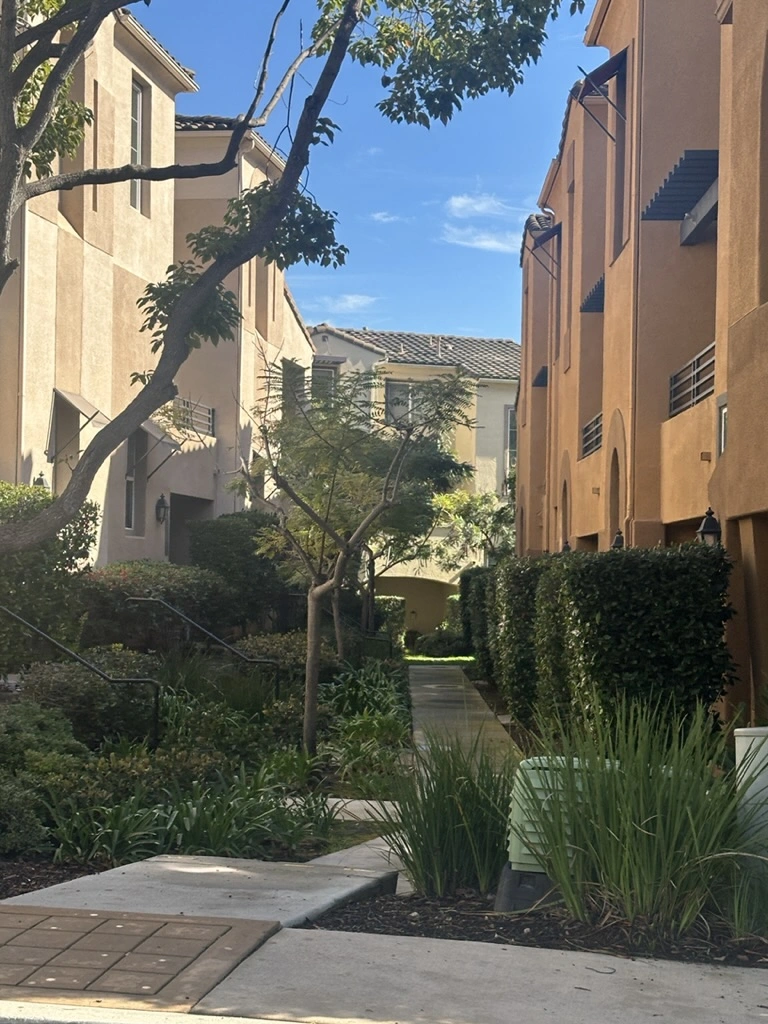
Mission Valley is ZIP 92108, the corridor running along Interstate 8 between Old Town and Grantville, and it is a denser, more apartment-heavy and condominium-heavy submarket than most of San Diego County. The all-unit average is $3,280 per month, down 1.2% over the year.
| Unit type | Average asking rent |
|---|---|
| All unit types | $3,280 (−1.2% year over year) |
| Studio | $2,340 |
| 1 bedroom | $2,760 |
| 2 bedroom | $3,510 |
| 3 bedroom | $4,810 |
| 4 bedroom | $5,420 |
Table 2. Average asking rents by unit type, ZIP 92108 Mission Valley, RentCast, August 2026.
Source: RentCast, ZIP 92108 rental market data, retrieved August 2026 through Realty Management Group's subscription account. RentCast does not publish a per-figure public URL for account pulls.
One caveat that matters when you price a unit. RentCast bedroom categories cover all rental property types in the ZIP. They are not restricted to detached single-family homes, and in 92108 the pool is heavily weighted toward apartments and condominiums. Use the bedroom figure as a benchmark, not as a prediction of what a specific property will achieve.
For context on the wider market, county vacancy stood at 5.5% in the second quarter of 2026, up 60 basis points year over year and flat against the first quarter, having peaked near 5.7% in late 2025. Units under construction across the county were down 20.9% year over year while net absorption was up 39.2%. Source: Kidder Mathews, Q2 2026.
Bottom line: a vacancy rate of 5.5% is a normal market, not a distressed one. Where owners lose money in a softer market is on condition and pricing, not on location. A unit priced correctly and maintained properly leases; a unit priced on last year's number sits.
The San Diego Tenant Protection Ordinance in Mission Valley
Mission Valley is inside the City of San Diego, which means San Diego Municipal Code §§98.0701 through 98.0709 reach residential rentals in the neighborhood, subject to the ordinance's own exemption criteria. Those criteria are separate from the state exemptions at Civil Code §1947.12 and §1946.2, and qualifying for a state exemption does not establish a city one. The ordinance was adopted as O-21647, effective June 24, 2023, and amended by O-21769 on February 27, 2024. Jurisdiction is decided by the parcel, not the mailing address, so confirm the parcel before assuming either way.
| Requirement | State law (Civil Code §1946.2) | City of San Diego (SDMC 98.0701–98.0709) |
|---|---|---|
| When just cause attaches | After 12 months of continuous occupancy | Day one of the tenancy |
| No-fault relocation assistance | One month of rent, or waiver of the final month | Two months of rent, three if the tenant is 62 or older or is disabled, paid within 15 days |
| Notification of a termination | None required | Notify the San Diego Housing Commission of both at-fault and no-fault terminations |
| Exemption notice | Statutory text at §1946.2(e)(8)(B)(i) | City-specific notice also required |
| Local rent cap | 8.2% through July 31, 2027 | None. The state 8.2% figure governs. |
Table 3. State versus City of San Diego tenancy requirements as they apply in Mission Valley, verified August 25, 2026.
The distinction most guides get wrong. Day-one just cause is a local rule, not a state one. Civil Code §1946.2 requires just cause only once a tenant has continuously occupied the unit for twelve months. Day one applies here because of the city ordinance, and it also applies in Chula Vista under CVMC 9.65 and in Imperial Beach under IBMC 9.90. Any page telling you that AB 1482 requires just cause from day one is describing a local ordinance and calling it state law.
The practical consequence in Mission Valley is that a 60-day notice with no stated cause, served on a tenant of four months, is defective on its face.
The AB 1482 Rent Cap and How to Calculate It
Under AB 1482, the maximum allowable rent increase in San Diego County is 8.2% for the period August 1, 2026 through July 31, 2027. That is 5% plus 3.2% CPI, using the BLS San Diego-Carlsbad twelve month change ending March 2026. Civil Code §1947.12(g)(1)(A)(iii) names that index for San Diego County, and §1947.12(g)(3)(B)(ii) directs the March-to-March measure where no April amount is published, which is the case here because BLS publishes San Diego-Carlsbad only on odd-numbered months. Increases are capped at 5% plus CPI or 10%, whichever is lower.
Two points that trip owners up. First, §1947.12(a)(2) permits up to two increments in a twelve month period for a continuing tenant, provided the cumulative total does not exceed the cap. Two increases of 4.1% are lawful. Two totalling 9% are not. Second, the correct index is San Diego-Carlsbad. Guidance citing the Los Angeles-Long Beach-Anaheim index for a San Diego County property is using the wrong index and will produce the wrong number.
| Current rent | Maximum increase at 8.2% | New rent | Additional annual income |
|---|---|---|---|
| $2,760 (1BR average) | $226.32 | $2,986.32 | $2,715.84 |
| $3,280 (all-unit average) | $268.96 | $3,548.96 | $3,227.52 |
| $3,510 (2BR average) | $287.82 | $3,797.82 | $3,453.84 |
| $4,810 (3BR average) | $394.42 | $5,204.42 | $4,733.04 |
Table 4. Maximum lawful rent increase at 8.2% on 92108 average rents, August 1 2026 through July 31 2027. Rent levels from RentCast, August 2026.
Notice requirements
Civil Code §827 requires 30 days written notice for an increase of 10% or less and 90 days above 10%. Because the cap is 8.2%, 30 days is standard for every lawful increase on a covered property. Add five calendar days if the notice is mailed within California. A text message is not written notice, and neither is an email.
The cap resets every August 1, so any figure carried over from a prior twelve month period is expired. A notice calculated on an expired figure with an effective date on or after August 1, 2026 exceeds the legal limit. The next reset is August 1, 2027, and because March CPI releases in April, next year's cap is knowable by mid-April.
TIME FOR A RENT INCREASE?
A notice built on last year's cap is void on its face, and you cannot fix it after service.
You start the 30 days again.
Is a Mission Valley Condominium Exempt From the Rent Cap?
Mission Valley has a lot of condominiums, so this question comes up more here than in most of the county. A condominium is separately alienable from the title to any other dwelling, which means it can qualify for the exemption at Civil Code §1947.12(d)(5) and §1946.2(e)(8), but only on two conditions.
Condition one, ownership. The owner cannot be a real estate investment trust, a corporation, or a limited liability company in which at least one member is a corporation. Condition two, notice. The rental agreement must contain the exact statutory language, for tenancies commenced or renewed on or after July 1, 2020. Generic lease boilerplate does not preserve the exemption. The statutory text at §1946.2(e)(8)(B)(i) reads:
"This property is not subject to the rent limits imposed by Section 1947.12 of the Civil Code and is not subject to the just cause requirements of Section 1946.2 of the Civil Code. This property meets the requirements of Sections 1947.12(d)(5) and 1946.2(e)(8) of the Civil Code and the owner is not any of the following: (1) a real estate investment trust, as defined by Section 856 of the Internal Revenue Code; (2) a corporation; or (3) a limited liability company in which at least one member is a corporation."
There is a second exemption people reach for, and in Mission Valley it usually does not apply the way they think. New construction is exempt where the certificate of occupancy was issued within the previous 15 years, under §1947.12(d)(4) for the rent cap and §1946.2(e)(7) for just cause. That is a rolling window that advances every January, not a fixed cutoff year. Any source giving you a fixed year, such as "built before 2010," is wrong, and was wrong the January after it was written.
An exemption from state law is not an exemption from the city ordinance. This is the single most consequential point on this page. SDMC 98.0701 through 98.0709 applies to residential rentals in the City of San Diego on its own terms, with its own exemption criteria and its own required notice. An owner who correctly establishes a state exemption for a Mission Valley condominium, serves the statutory notice, and then serves a no-cause 60-day notice on a six-month tenant has complied with state law and violated the city ordinance.
Bottom line: exemption status is a document question, not an opinion. It turns on who holds title, what the certificate of occupancy says, and whether the exact statutory paragraph is in the lease. All three are verifiable in an afternoon, and all three are worth verifying before you serve anything.
State Laws That Changed for 2026
| Law | What it requires | What it means in Mission Valley |
|---|---|---|
| AB 12 Civil Code §1950.5 | Security deposit capped at one month of rent for most California residential landlords since July 1, 2024, furnished or unfurnished. Limited exception for a natural-person owner of no more than two residential properties totalling four or fewer units. Service members capped at one month. Return within 21 days with an itemized statement. | At the 92108 average of $3,280, the deposit ceiling is $3,280, not $6,560. Older leases still collecting two months are a live exposure. |
| AB 2801 Deposit photographs | Two separate dates. Since April 1, 2025, photographs immediately after the tenancy ends and before any cleaning or repair, plus post-repair photographs where a deduction is claimed, for all tenancies regardless of start date. Since July 1, 2025, move-in photographs, but only for tenancies beginning on or after that date. | Most published summaries collapse these into one date. In a condominium, decide in advance which areas are the unit and which are HOA common area. |
| AB 628 Civil Code §1941.1 | Leases signed, renewed or amended on or after January 1, 2026 must include a working stove and refrigerator, with a 30 day repair window running from notice of failure. | Older condominium stock in the corridor frequently came unfurnished with appliances. Renewal is the trigger, so this catches long-standing tenancies too. |
| AB 2493 Civil Code §1950.6 | Written screening criteria must be provided to applicants and disclosed before any screening fee is collected. Applications considered in the order received. The fee is limited to the actual out-of-pocket cost of gathering the information. Refund within 7 days of selecting a tenant or 30 days of application, whichever comes first, with no refund owed where an applicant was considered and denied for not meeting the established criteria. Credit report copy to the applicant within 7 days. | A high-application submarket. The order-received requirement is the one most often missed when several applications arrive the same day. |
| AB 2747 Rent reporting | Landlords must offer tenants the option of having on-time rent payments reported to credit bureaus, at signing and annually thereafter. | The offer is mandatory even though tenant participation is voluntary. |
Table 5. California residential rental law changes in force for San Diego County landlords, verified August 25, 2026. For the full picture across every statute, see the 2026 California rental laws guide and the California landlord law index.
What Management Costs at Mission Valley Rent Levels
For an owner comparing Mission Valley property management companies, the fee structure is worth more attention here than in most of the county, because 92108 rents are high enough that the percentage itself moves real money.
A percentage fee is a share of your rent. A flat fee is a price. The difference between them is small in a low-rent submarket and largest in a high-rent one, which is why the arithmetic is worth doing in 92108 specifically. RMG charges a flat $199 per month for one to three units and $179 per unit per month for four to sixteen, with no leasing fee, no renewal fee and no markup on maintenance. Above $5,000 per month in rent the fee is 6% of rent.
| Monthly rent | 8% model, per year | RMG flat fee, per year | Difference, year 1 | Over 3 years |
|---|---|---|---|---|
| $2,760 (1BR) | $2,649.60 | $2,388 | $261.60 | $784.80 |
| $3,280 (all-unit) | $3,148.80 | $2,388 | $760.80 | $2,282.40 |
| $3,510 (2BR) | $3,369.60 | $2,388 | $981.60 | $2,944.80 |
| $4,810 (3BR) | $4,617.60 | $2,388 | $2,229.60 | $6,688.80 |
Table 6. Annual management cost comparison at 92108 rent levels, monthly management fee only. Rent levels from RentCast, August 2026. RMG flat fee as of August 2026.
Every rent level in that table sits below the $5,000 threshold, so the flat fee applies throughout. A four bedroom at the 92108 average of $5,420 would price at 6% instead. Two further things the table does not capture, both of which widen the gap. First, percentage agreements commonly add a leasing fee at every turnover and an annual renewal fee, and many also mark up maintenance invoices. RMG charges none of the three, so any of them adds to the difference above rather than being included in it. Second, a percentage fee rises automatically with every rent increase. Apply the full 8.2% to a unit at $3,280 and an 8% fee goes from $262.40 to $283.92 per month, for no change in service. The flat fee does not move.
Bottom line: at Mission Valley rent levels the fee structure is worth roughly $760 to $2,230 a year before turnover costs, and the gap compounds every time the rent goes up. For the full comparison across county rent levels, see flat fee versus percentage property management in San Diego.
RMG Results in Mission Valley
| Measure | RMG, Mission Valley | Industry benchmark |
|---|---|---|
| Units managed in Mission Valley | 29 | — |
| Days from vacancy to signed lease | 6 | 30–41 nationally (see note) |
| Average tenancy | 49 months | ~27 months |
| Occupancy | 100% | ~93–94% |
| On-time rent | 99.1% | — |
| Evictions filed on RMG-managed Mission Valley properties since 2005 | 0 | — |
Table 7. RMG Mission Valley portfolio performance, internal Rentvine management data, 2026, against national benchmarks.
What the days-to-lease benchmark actually measures. The 30 to 41 day range spans two different things and they are not interchangeable. RentCafe's 2025 year-end figure of 41 days is average total days vacant, including make-ready before the unit is listed. Apartment List's roughly 30 days is list-to-lease and excludes make-ready. RMG's 6 days is measured from vacancy to signed lease, so it is comparable in kind to the RentCafe figure rather than the Apartment List figure. Both national figures are apartment and multifamily measures rather than San Diego single-family or small multifamily.
Industry figures: RentCafe 2025 and Apartment List 2026 time-to-lease; SFR occupancy approximately 94.4% as of September 2025; national average tenancy. RMG figures reflect internal Rentvine management data for RMG-managed Mission Valley properties as of August 2026.
Frequently Asked Questions
What is the average rent in Mission Valley in 2026?
The average rent across all unit types in ZIP 92108 is $3,280 per month, down 1.2% year over year. By bedroom count: studio $2,340, one bedroom $2,760, two bedroom $3,510, three bedroom $4,810, four bedroom $5,420. Source: RentCast, August 2026. RentCast bedroom categories cover all rental property types in the ZIP and are not restricted to detached single-family homes.
Does the San Diego tenant protection ordinance apply to Mission Valley rentals?
Yes. Mission Valley is inside the City of San Diego, so residential rentals are subject to San Diego Municipal Code sections 98.0701 through 98.0709 unless an exemption under the ordinance applies. The ordinance requires just cause from day one of the tenancy, rather than after twelve months as under state law, and it requires a city-specific exemption notice. It also requires relocation assistance equal to two months of rent for a no-fault termination, three months if the tenant is 62 or older or is disabled, paid within 15 days, and it requires the landlord to notify the San Diego Housing Commission of both at-fault and no-fault terminations. The ordinance's exemption criteria are separate from the state exemptions, so qualifying for one does not establish the other. Jurisdiction is decided by the parcel, not the mailing address.
What is the maximum rent increase in Mission Valley in 2026?
For a covered property, 8.2% for the period August 1, 2026 through July 31, 2027. That is 5% plus 3.2% CPI, using the BLS San Diego-Carlsbad twelve month change ending March 2026. Civil Code 1947.12(g)(1)(A)(iii) names that index for San Diego County, and 1947.12(g)(3)(B)(ii) directs the March-to-March measure where no April amount is published, which is the case here because BLS publishes San Diego-Carlsbad only on odd-numbered months. Increases are capped at 5% plus CPI or 10%, whichever is lower. On the 92108 average of $3,280, 8.2% is $268.96 per month.
Can I raise the rent twice in one year in Mission Valley?
Yes. Civil Code 1947.12(a)(2) permits up to two increments in a twelve month period for a continuing tenant, provided the cumulative total does not exceed the cap. Two increases of 4.1% are lawful. Two increases totalling 9% are not. Many published guides still say only one increase is allowed, which is incorrect.
Is my Mission Valley condo exempt from AB 1482?
It may be exempt from the rent cap if it is separately alienable from the title to any other dwelling and is not owned by a real estate investment trust, a corporation, or an LLC with a corporate member, under Civil Code 1947.12(d)(5) and 1946.2(e)(8). The exemption only holds if the exact statutory notice appears in the rental agreement for tenancies commenced or renewed on or after July 1, 2020. Boilerplate that does not contain that language does not preserve the exemption. Two cautions specific to Mission Valley: an exemption from the state rent cap is not an exemption from the San Diego ordinance, which has separate local exemption criteria and its own notice requirements, and new construction is exempt only where the certificate of occupancy was issued within the previous 15 years, a window that advances every January rather than a fixed year.
How much notice do I have to give for a rent increase in Mission Valley?
Thirty days under Civil Code 827 for an increase of 10% or less, and 90 days for an increase above 10%. Because the cap is 8.2%, 30 days is the standard for every lawful increase on a covered property. Add five calendar days if the notice is mailed within California. Text messages and email are not written notice.
How much security deposit can I collect in Mission Valley?
One month of rent for most California residential landlords since July 1, 2024 under Civil Code 1950.5, whether the unit is furnished or unfurnished. There is a limited exception permitting up to two months for a natural-person owner of no more than two residential properties totalling four or fewer units. Service member tenants are capped at one month. The deposit must be returned within 21 days with an itemized statement. For the full treatment, see the San Diego County security deposit guide.
What photos do I need to take to keep a security deposit deduction?
AB 2801 sets two separate dates and they are commonly collapsed into one. Since April 1, 2025, a landlord must take photographs immediately after the tenancy ends and before any cleaning or repairs, plus photographs after the repair where a deduction is claimed, and this applies to all tenancies regardless of when they started. Separately, since July 1, 2025, move-in photographs are required, but only for tenancies beginning on or after that date.
How much does property management cost in Mission Valley?
RMG charges a flat $199 per month for one to three units at rents up to $5,000, which is $2,388 per year and does not change as the rent rises inside that range. Above $5,000 per month in rent the fee is 6% of rent, and four to sixteen units are $179 per unit per month. A percentage model at 8% on the 92108 average of $3,280 is $262.40 per month, or $3,148.80 per year, a difference of $760.80 in the first year and $2,282.40 over a three year tenancy. On a three bedroom at $4,810, the same 8% is $384.80 per month, or $4,617.60 per year, a difference of $2,229.60 per year. Percentage agreements also commonly add a leasing fee at turnover and an annual renewal fee. RMG charges neither, and does not mark up maintenance.
Do I need a real estate licence to manage a rental in Mission Valley?
An owner managing their own property does not. A third party managing someone else's property for compensation does. Business and Professions Code 10131(b) expressly lists leasing, renting, soliciting prospective tenants, negotiating leases and collecting rents as acts requiring a broker licence when performed for another for compensation, and 10130 makes it unlawful to do so without one. Section 10131.01 carves out a resident manager of an apartment building and their employees, so the blanket statement that no licence is needed is not universally wrong, it is wrong for a third party company managing for a fee.
What happens if a tenant stops paying rent in Mission Valley?
Nonpayment of rent is an at-fault just cause, so unlike a no-fault termination it is available as grounds from the first day of the tenancy and carries no relocation assistance obligation. The San Diego ordinance still requires the landlord to notify the San Diego Housing Commission of an at-fault termination, and that step is the one most often missed. RMG coordinates the process and covers court filing costs during the first twelve months of any tenancy where RMG placed the tenant. For the full sequence, see the San Diego eviction process guide and what to do when a tenant stops paying rent.
How long does it take to lease a rental in Mission Valley?
Across the 29 units RMG manages in Mission Valley as of August 2026, the average is 6 days from vacancy to signed lease. National benchmarks run 30 to 41 days, and those two figures measure different things: RentCafe's 2025 year-end figure of 41 days is total days vacant including make-ready before listing, while Apartment List's roughly 30 days is list-to-lease and excludes make-ready. RMG's figure is measured from vacancy to signed lease, so it is comparable in kind to the RentCafe measure rather than the Apartment List measure. Both national figures are apartment and multifamily measures rather than San Diego specific.
Free Rental Analysis for Your Mission Valley Property
A current rent benchmark for your unit type, a check of your lease against both the state exemption notice and the San Diego ordinance, and a straight comparison of what you are paying in management fees today. No obligation.
Get a Free Rental Analysis Call (619) 456-0000Realty Management Group · 4025 Camino Del Rio South, Suite 300, San Diego, CA 92108 · (619) 456-0000
About the author
Scott Engle is the Broker/Owner of Realty Management Group (DRE #01332676, Corp DRE #02075336). He has been a licensed California broker since 2003 and has managed San Diego County rental property since 2005. As of August 2026, RMG manages 400+ units countywide, with management starting at a flat $199 per month, and holds a 4.9-star rating across 127 Google reviews. RMG has been named Best Property Management Company in San Diego by Expertise.com in 2023, 2024, and 2025.
Related Articles
- 2026 California Rental Laws: What San Diego Landlords Need to Know
- California Landlord Law Index
- Security Deposits in San Diego County
- Flat Fee vs. Percentage Property Management in San Diego
- What to Do When a Tenant Stops Paying Rent in California
- The San Diego Rent Cap, Explained
- How to Evict a Tenant in San Diego: Step-by-Step Guide (2026)
- Ultimate Guide to Property Management for San Diego Rental Owners
- Out-of-State Landlord Guide: Managing a San Diego Rental Remotely
- La Mesa Property Management: 2026 Guide for Rental Owners
- Santee and Lakeside Property Management: 2026 East County Guide
Areas We Serve Near Mission Valley
Mission Valley · San Diego · Multi-Family · La Mesa · El Cajon · Chula Vista · National City · Lemon Grove · Spring Valley · Santee
Rent figures from RentCast, August 2026, retrieved from a private account. Market figures from Kidder Mathews, Q2 2026. Statutory references verified against California leginfo and the San Diego Municipal Code on August 25, 2026. As of our August 2026 review of the applicable municipal codes, the City of San Diego imposes just cause and relocation requirements beyond state law but does not impose a local rent cap. Ordinance status changes, so confirm the current code before acting. This guide is general information about California and San Diego law and is not legal or tax advice for any specific property. Consult a qualified attorney or CPA on your own facts.