Updated September 2026 | Authored by Scott Engle, Broker DRE #01332676 | Realty Management Group | Serving San Diego County Since 2005
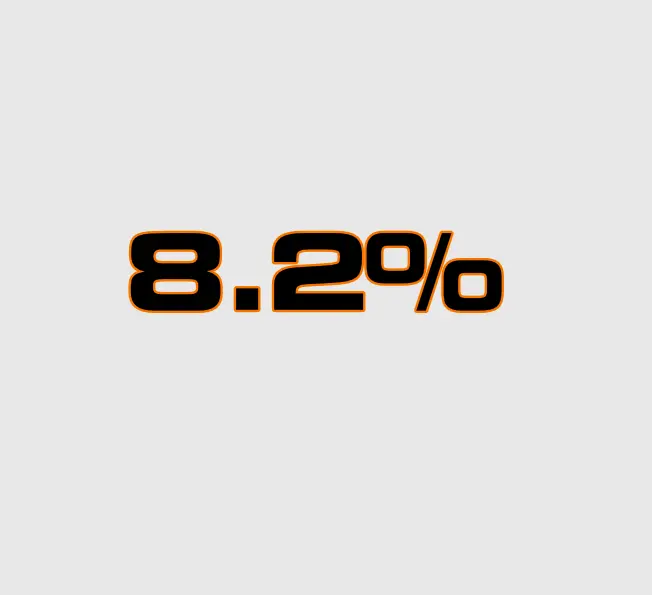
The maximum rent increase in San Diego is 8.2%, which is 5% plus a San Diego-Carlsbad CPI change of 3.2%, effective August 1, 2026 through July 31, 2027. It applies to most residential rentals built before January 1, 2011 under California AB 1482.
That is the number. The rest of this page is the part that actually costs landlords money: whether your property is covered, whether your lease supports an exemption, how to serve a notice that holds up, and the specific procedural errors that void an otherwise correct increase.
It also explains something most guides get wrong, which is why San Diego uses a March CPI figure when the statute says April. There is a specific, verifiable reason, and knowing it is the difference between calculating your cap correctly and copying someone else's number.
Quick Answer
How much can I raise rent in San Diego? The maximum allowable increase is 8.2% for covered properties under California AB 1482, which is 5% plus a San Diego-Carlsbad CPI change of 3.2%, effective August 1, 2026 through July 31, 2027.
What is the AB 1482 rent cap? A statutory limit under California Civil Code §1947.12 on how much rent may rise in any 12-month period on covered residential property. The cap is 5% plus regional CPI, never more than 10% total. For San Diego County that is 8.2%.
Does the cap apply to my property? AB 1482 covers most San Diego County rentals built before January 1, 2011, a rolling 15-year threshold that advances every January. Single-family homes and condos not owned by a corporation, REIT, or LLC with a corporate member may be exempt, but only if the required written notice was served. Without it, the property is treated as covered.
How many increases per year? A maximum of two in any 12-month period, and the combined total cannot exceed 8.2% of the lowest rent charged in the prior 12 months. Two increases of 4.1% each, with the second calculated on the increased rent, exceed the cap; see how to split it correctly. One annual increase is simpler and easier to defend.
How much notice is required? 30 days written notice for increases of 10% or less under Civil Code §827. Because the cap is 8.2%, 30 days applies to increases on a covered property; an exempt property's increase above 10% needs 90 days. Section 827 authorizes personal delivery or mail; a mailed notice is subject to the five-day extension in Code of Civil Procedure §1013.
Cap figure: California Civil Code §1947.12 applied to BLS San Diego-Carlsbad CPI-U data for the 12 months ending March 2026. General information, not legal advice.
The current cap is 8.2%, effective August 1, 2026 through July 31, 2027. The cap resets every August 1, so any figure carried over from a prior twelve-month period is expired. A notice calculated on an expired figure with an effective date on or after August 1, 2026 exceeds the legal limit, and a number of San Diego property management and legal information pages have not yet updated.
On This Page
- Maximum allowable increase by rent level
- Why San Diego uses a March CPI figure
- Does the cap apply to your property?
- What changes by city
- How to issue an increase that holds up
- Six errors that void an increase
- Four things commonly reported wrong
- The larger risk is not the cap
- When not to take the full increase
- Frequently asked questions
- Sources
Maximum Allowable Increase by Rent Level
| Current Rent | Max Increase (8.2%) | New Monthly Rent | Added Annual Revenue |
|---|---|---|---|
| $1,800 | $147 | $1,947 | $1,764 |
| $2,000 | $164 | $2,164 | $1,968 |
| $2,200 | $180 | $2,380 | $2,160 |
| $2,400 | $196 | $2,596 | $2,352 |
| $2,600 | $213 | $2,813 | $2,556 |
| $2,800 | $229 | $3,029 | $2,748 |
| $3,000 | $246 | $3,246 | $2,952 |
| $3,200 | $262 | $3,462 | $3,144 |
| $3,500 | $287 | $3,787 | $3,444 |
| $3,800 | $311 | $4,111 | $3,732 |
| $4,200 | $344 | $4,544 | $4,128 |
| $4,800 | $393 | $5,193 | $4,716 |
| $5,500 | $451 | $5,951 | $5,412 |
Bottom line: two increases in 12 months are permitted, but combined they cannot exceed 0.082 × the lowest rent charged in the 12 months before the second increase takes effect. If the first increase was 5%, the second is the remaining 3.2% of that base, not 3.2% of the increased rent and not a fresh 8.2%. Worked examples at three rent levels: two rent increases, one cap.
Is your rent already below market? Then the cap is not your problem.
Under AB 1482, the rent you set becomes the base every future increase is calculated from. Start $200 low and 8.2% a year never catches up. Send us your address and we will compare it against current comps. Free, and you keep the number whether you hire us or not.
Check My RentWhy San Diego Uses a March CPI Figure When the Statute Says April
This is the part almost every rent cap guide skips, and it is the reason two sources can quote San Diego landlords two different numbers.
Civil Code §1947.12 directs landlords to use the regional CPI change for the 12 months ending in April. For most California metros that works. For San Diego it cannot, because no April figure exists.
Following the 2018 CPI Geographic Revision, the Bureau of Labor Statistics publishes the San Diego-Carlsbad CPI bi-monthly rather than monthly. Releases cover the two-month periods ending in January, March, May, July, September, and November. There is no February, April, June, August, October, or December figure for San Diego at all.
Because the April figure the statute references does not exist for this area, the March-to-March change is used instead. That is where 3.2% comes from, and why the San Diego cap is 8.2% rather than some other number.
The same applies to Riverside County. If you own in both San Diego and, say, Los Angeles County, you are working from two different CPI months for two different caps, which is exactly how owners end up applying the wrong figure to the wrong property.
Verify the current figure yourself: BLS San Diego area CPI news release (always shows the latest release) or the Pacific Cities CPI data tables. San Diego-Carlsbad covers all of San Diego County.
Practical consequence: the March release lands in April, roughly three months before the August 1 cap reset. If you want to know next year's cap before you plan your renewals, watch for the April BLS release rather than waiting until August.
Does the Cap Apply to Your Property?
| Property | Covered? | Condition |
|---|---|---|
| Apartment completed before Jan 1, 2011 | Yes | No exemption available |
| Apartment completed on or after Jan 1, 2011 | No | Exempt by statute, no action needed, but the date advances every January |
| SFH or condo, individually owned | Exempt only with notice | Written exemption notice under Civil Code §§1946.2 and 1947.12 |
| SFH or condo owned by corporation, REIT, or LLC with a corporate member | Yes | No ownership exemption available regardless of notice |
| SFH or condo, notice never served | Yes, until served | Can be served prospectively by change of terms; applies going forward only |
| Subsidized affordable housing | Typically exempt | Verify with the administering housing authority |
| Owner-occupied duplex | Exempt if owner occupies | Owner must occupy one unit at the start of the tenancy |
The exemption notice is the most commonly missing document in California single-family rental files. Most owners of individually held houses and condos have never been told it exists. Without it, an otherwise qualifying property is treated as covered by the cap and by just-cause requirements.
It can be fixed, but only forward. An owner who inherited a tenancy without the notice may serve it prospectively through a 30-day change of terms. The exemption then applies from that point on. It does not retroactively validate an increase already issued, and it does not cure a termination notice already served. Full detail in our AB 1482 exemption guide.
What Changes by City
| City or Area | Cap | Local Ordinance | What It Adds |
|---|---|---|---|
| City of San Diego | 8.2% | Yes, SDMC §§98.0701 to 98.0709 | Just cause from day one, not 12 months. Two months' relocation for no-fault, three if the tenant is 62 or older or disabled, paid within 15 days. Housing Commission must be notified of at-fault and no-fault terminations. |
| Chula Vista | 8.2% | Yes, CVMC 9.65 | Just cause and relocation for no-fault. City must be notified within 3 business days of a no-fault termination or the notice is invalid. $40 per square foot substantial-remodel minimum. The exemption notice must also cite CVMC 9.65, since the state form alone does not establish exemption here. |
| Imperial Beach | 8.2% | Yes, IBMC 9.90 | Just cause. Stricter substantial-remodel definition. City filing within 3 business days. Additional relocation at properties of 15 or more units. |
| La Mesa | 8.2% | None | State AB 1482 only |
| El Cajon | 8.2% | None | State AB 1482 only |
| National City | 8.2% | None | State AB 1482 only |
| Santee, Lakeside | 8.2% | None | State AB 1482 only |
| Lemon Grove, Spring Valley | 8.2% | None | State AB 1482 only |
| Mission Valley | 8.2% | Yes, inside the City of San Diego | SDMC §§98.0701 to 98.0709 applies in full |
| Escondido, Vista, San Marcos | 8.2% | None | State AB 1482 only |
| Oceanside, Carlsbad, Encinitas, Poway | 8.2% | None | State AB 1482 only |
A San Diego mailing address does not mean a City of San Diego address. Mission Valley, Downtown, Pacific Beach, North Park, Clairemont, and La Jolla are inside city limits and carry the ordinance. La Mesa, El Cajon, Santee, and Lemon Grove are separate incorporated cities and do not. Owners get this wrong constantly, and it is the difference between just cause at twelve months and just cause on day one.
How to Issue an Increase That Holds Up
1. Confirm coverage. Covered, or validly exempt? For a house or condo, check whether the exemption notice is actually in the file, not whether you believe the property qualifies.
2. Verify the current cap. 8.2% through July 31, 2027. Check the BLS San Diego release rather than a secondary source. The cap resets every August 1.
3. Calculate. The lowest rent charged in the prior 12 months × 0.082, rounded down. If the rent has not changed in 12 months, that is the current rent. Less is fine. More is not.
4. Check the 12-month history. Any increase in the trailing twelve months counts against the same cap, and the base stays the lowest rent in that window.
5. Serve the notice by an authorized method. Minimum 30 days before the effective date. Civil Code §827(b)(1) authorizes personal delivery or mail under Code of Civil Procedure §1013, which adds five calendar days in-state. Text and email are not among the authorized methods.
6. Document delivery. Keep the notice, the method, and the date. If the increase is ever disputed, this is the entire defense.
7. If the property is in the City of San Diego, Chula Vista, or Imperial Beach, check the local ordinance before serving anything. The state rules are the floor.
Six Errors That Void an Increase
1. Using an expired cap figure. The cap resets every August 1. A notice calculated on a prior period's figure, with an effective date on or after August 1, 2026, exceeds the current 8.2% limit. This is the most common live error on San Diego rent increase notices right now.
2. Applying it to a lease without the required disclosures. A correct number on a non-compliant lease is still a disputed increase.
3. Serving by text or email. Neither is a method of service that Civil Code §827(b)(1) authorizes. Serve personally or by mail under Code of Civil Procedure §1013.
4. Missing the 30-day minimum. Void. The process restarts and the effective date moves, so the delay costs the increase itself.
5. Exceeding the cumulative cap. Two increases per 12 months are allowed. If the first was 5%, the second cannot exceed 3.2% of the original base, not 3.2% of the increased rent and not a fresh 8.2%. The arithmetic: two increases, one cap.
6. Ignoring the local ordinance. In Chula Vista a no-fault notice is invalid unless the City is notified within three business days. In Imperial Beach any termination notice must be filed with the City within three business days. In the City of San Diego the Housing Commission must be notified.
What a failed notice actually costs
La Mesa condo, 2 bedroom, built 1988, renting at $2,600. Covered under AB 1482. The owner texts the tenant on March 1 that rent goes up $213 on April 1.
The math is right. $2,600 × 0.082 = $213. Thirty-one days clears the 30-day minimum. On paper this is a valid increase.
The delivery is not. A text is not a method of service that §827 authorizes, so the notice was never served and there is no effective date. Being right about the number does not save it.
Cost: the tenant declines the increase and is entitled to. Re-serve personally or by mail; if mailed, 30 days plus the five-day §1013 extension. Then it applies. Roughly six weeks at $213 a month, lost to a delivery method that would have cost a stamp.
Four Things Commonly Reported Wrong
1. "AB 1482 covers properties built before 2010." The threshold is a rolling 15 years, not a fixed year. In 2026 the line is January 1, 2011. In 2027 it becomes January 1, 2012. Any page quoting a fixed year is either stale or was written without noticing the mechanism, and a property exempt last year can be covered this year.
2. "Use the April CPI." The statute says April, but BLS publishes no April figure for San Diego. See the section above. The San Diego area CPI is bi-monthly, so March-to-March applies here. Following the statute literally in San Diego produces no number at all.
3. "A missing exemption notice can never be fixed." Overstated. The notice can be served prospectively by a 30-day change of terms, and the exemption applies from that point forward. What it cannot do is retroactively validate an increase already issued or a notice already served.
4. "AB 1482 expires soon." It sunsets January 1, 2030, a date written into the bill text and restated in the Senate Judiciary analysis of SB 567. Some sources report a 2026 expiry, which is wrong. The Legislative Analyst's Office must report to the Legislature before that date, which is probably the source of the confusion.
5. "Split the cap into two increases of 4.1%." Only if the second 4.1% is calculated on the original rent. Applied to the increased rent, 1.041 × 1.041 is 1.0837 and the second notice exceeds the cap on every rent level. Civil Code §1947.12(a)(1) measures the cap against the lowest rent charged in the prior 12 months, not the current rent. Full arithmetic: two rent increases, one cap.
The Larger Risk Is Not the Cap
Under AB 1482, the rent you set at signing is not just this year's price. It is the base every future increase is calculated from. Start $200 below market and 8.2% a year cannot close the gap, because each increase is a percentage of a number that was already low. The longer the tenancy, the longer the gap persists.
| Below market by | Annual loss | Over a 3-year tenancy |
|---|---|---|
| $100/month | $1,200 | $3,600 |
| $200/month | $2,400 | $7,200 |
| $300/month | $3,600 | $10,800 |
| $500/month | $6,000 | $18,000 |
Bottom line: this is a straight-line calculation of the rent difference. It excludes the compounding effect of a suppressed base on later increases, so the true gap is larger.
We prepare and serve every notice, with the calculation documented.
Coverage verified, exemption notice checked, cap calculated against the current BLS figure, notice served by a compliant method with proof of delivery retained. Included in the flat $199 per month, with no separate charge for notice preparation.
Get My Free Rental AnalysisWhen Not to Take the Full Increase
There is an unresolved repair. Raising rent while a reported leak or failed appliance is outstanding hands the tenant a legal argument and a negotiating position at the same time. Close it first.
The increase is small relative to turnover cost. One vacant month on a $3,000 unit is $3,000 before make-ready. A $246 increase takes a full year to earn that back. If the increase is what tips a reliable tenant into leaving, the arithmetic fails.
The tenancy is already unstable. A recent job loss or separation makes a tenant a vacancy risk at any rent. Timing an increase against that accelerates the departure.
You are near a refinance or insurance renewal. A vacancy landing while a lender or insurer is looking at the property creates exposure on both sides. Time increases against the property's financial calendar, not only the lease anniversary.
You are already within a few percent of market. A tenant paying $2,600 on a $2,700 unit is close enough that chasing the last $100 risks a $2,700 vacancy. That is not generosity, it is arithmetic.
Frequently Asked Questions
How much can I raise rent in San Diego?
8.2% for covered properties under AB 1482, effective August 1, 2026 through July 31, 2027. On a $2,800 unit that is $229 a month. On a $3,200 unit, $262. The cap is 5% plus a San Diego-Carlsbad CPI change of 3.2%, and it resets every August 1.
Why does San Diego use the March CPI when the law says April?
Because no April figure exists for San Diego. Following the 2018 CPI Geographic Revision, BLS publishes the San Diego-Carlsbad CPI bi-monthly, covering periods ending in January, March, May, July, September, and November. Since Civil Code §1947.12 references an April figure that is not published for this area, the March-to-March change is used instead. The same applies to Riverside County.
Which properties are exempt from the cap in 2026?
Property completed on or after January 1, 2011, a rolling 15-year threshold that advances every January. Single-family homes and individually owned condos may also be exempt, but only if the owner is not a corporation, REIT, or LLC with a corporate member, and served the required written notice. Multi-unit apartment buildings never qualify for the single-family exemption.
What if I never served the AB 1482 exemption notice?
The property is treated as covered until the notice is served. You can serve it prospectively through a 30-day change of terms, and the exemption applies from that point forward. It does not retroactively validate an increase already issued or a termination notice already served. If the property is in Chula Vista, the notice must also cite CVMC 9.65, since the state form alone does not establish exemption from the local ordinance.
Do La Mesa or El Cajon have rent control?
No. Neither has a local rent or just-cause ordinance, and both are governed by state AB 1482 at the same 8.2% cap that applies countywide. Within San Diego County only the City of San Diego, Chula Vista, and Imperial Beach add local rules on top of state law.
How much notice is required for a rent increase in California?
30 days written notice for increases of 10% or less, 90 days above 10%, under Civil Code §827. Because the cap is 8.2%, 30 days is the standard for covered properties. Section 827 authorizes personal delivery or mail, and a mailed notice is subject to the five-day extension in Code of Civil Procedure §1013. Text and email are not authorized methods.
Can I raise rent twice in one year?
Yes, up to two increases in any 12-month period, but they share one cap measured against the lowest rent charged in the prior 12 months. Two increases of 4.1% each, with the second calculated on the increased rent, exceed the cap; the second must be calculated from the base. The arithmetic is in our two-increase guide. One annual increase is operationally simpler and easier to defend if challenged.
Can I raise rent more than 8.2% if my property is exempt?
A validly exempt property has no statutory cap under state law. The notice periods still apply, and in the City of San Diego, Chula Vista, or Imperial Beach the local ordinance still governs terminations regardless of AB 1482 exemption status. Confirm the exemption is valid, including the notice, before issuing any above-cap increase.
When does the cap reset, and when will I know next year's number?
Every August 1. The current 8.2% runs through July 31, 2027. Because the calculation uses the March CPI figure and BLS releases March data in April, you can generally know next year's cap by mid-April, about three months before it takes effect, which is useful for planning renewals.
What happens if I raise rent above the cap?
It violates Civil Code §1947.12. The tenant may refuse the excess amount, and the owner may be liable for damages and attorney fees. Only the portion above the cap is unenforceable, not the entire increase, but the dispute costs more than the difference in nearly every case.
Key Takeaways
- Maximum increase, San Diego County: 8.2%, August 1, 2026 through July 31, 2027
- Formula: 5% plus the San Diego-Carlsbad CPI change of 3.2%, capped at 10% total
- Coverage: most rentals built before January 1, 2011, a rolling 15 years that advances every January
- Two increases permitted per 12 months; the cumulative total cannot exceed the cap, measured against the lowest rent in the prior 12 months
- Notice: 30 days, served personally or by mail; a mailed notice picks up the five-day extension in Code of Civil Procedure §1013. Text and email are not authorized methods.
- Most of San Diego County has no local ordinance. Only the City of San Diego, Chula Vista, and Imperial Beach add local rules.
- The cap resets August 1, 2027. Do not carry 8.2% past that date without re-verifying.
Sources
The cap: California Civil Code §1947.12 applied to BLS San Diego-Carlsbad CPI-U data for the 12 months ending March 2026.
The bi-monthly publication schedule and the absence of an April San Diego figure: BLS Pacific Cities CPI data tables, which also confirm that San Diego-Carlsbad covers San Diego County.
Notice requirements: Civil Code §827 and Code of Civil Procedure §1013. Exemptions and just cause: Civil Code §§1946.2 and 1947.12.
Local ordinances: San Diego Municipal Code §§98.0701 to 98.0709; Chula Vista Municipal Code Chapter 9.65, including the §9.65.040(C) exemption notice language; Imperial Beach Municipal Code Chapter 9.90. Ordinances are amended, so confirm current requirements with the city before serving any notice.
This guide reflects California law and San Diego County data as of September 2026. The 8.2% cap applies to increases with an effective date from August 1, 2026 through July 31, 2027. Rolling exemption thresholds, CPI figures, and local ordinances all change, so verify current figures before serving any notice. This is general information, not legal advice. Consult a qualified California attorney for your specific property.
Three months free, then a flat $199 per month
The 8.2% is the easy part.
The hard part is whether your property is covered, whether the exemption notice is actually in the file, whether your notice method holds up, and whether the rent you are increasing from is anywhere near market. Send us the address and we will check all four. Free, and the answers are yours either way.
Get My Free Rental Analysis Call (619) 456-0000
Realty Management Group | 4025 Camino Del Rio South, Suite 300, San Diego, CA 92108 | (619) 456-0000 | info@choosermg.com
About the Author
Scott Engle is the Broker/Owner of Realty Management Group (DRE #01332676, Corp DRE #02075336). He has been a licensed California real estate broker since 2002, has managed San Diego County rental property since 2003, and founded Realty Management Group in 2005. RMG manages 400+ units countywide on a flat $199 per month fee, holds a 4.9 star rating across 127 Google reviews, and has been named Best Property Management Company in San Diego by Expertise.com in 2023, 2024, and 2025.
Related Articles
- California Landlord Law Index: Every Bill by Number, With Dates
- AB 1482 Exemptions and the 2026 San Diego Cap
- Which San Diego Cities Have Rent Control?
- San Diego Rent Cap 2026 to 2027
- Two Rent Increases, One Cap: How the AB 1482 Two-Increment Rule Works
- 2026 California Rental Laws: What Changed
- California Security Deposit Guide: Rules, Deadlines and AB 2801
Rent Increase Compliance, Markets We Serve
San Diego · Chula Vista · La Mesa · El Cajon · Santee · National City · Lemon Grove · Spring Valley · Mission Valley · Escondido · Poway · Multi-Family