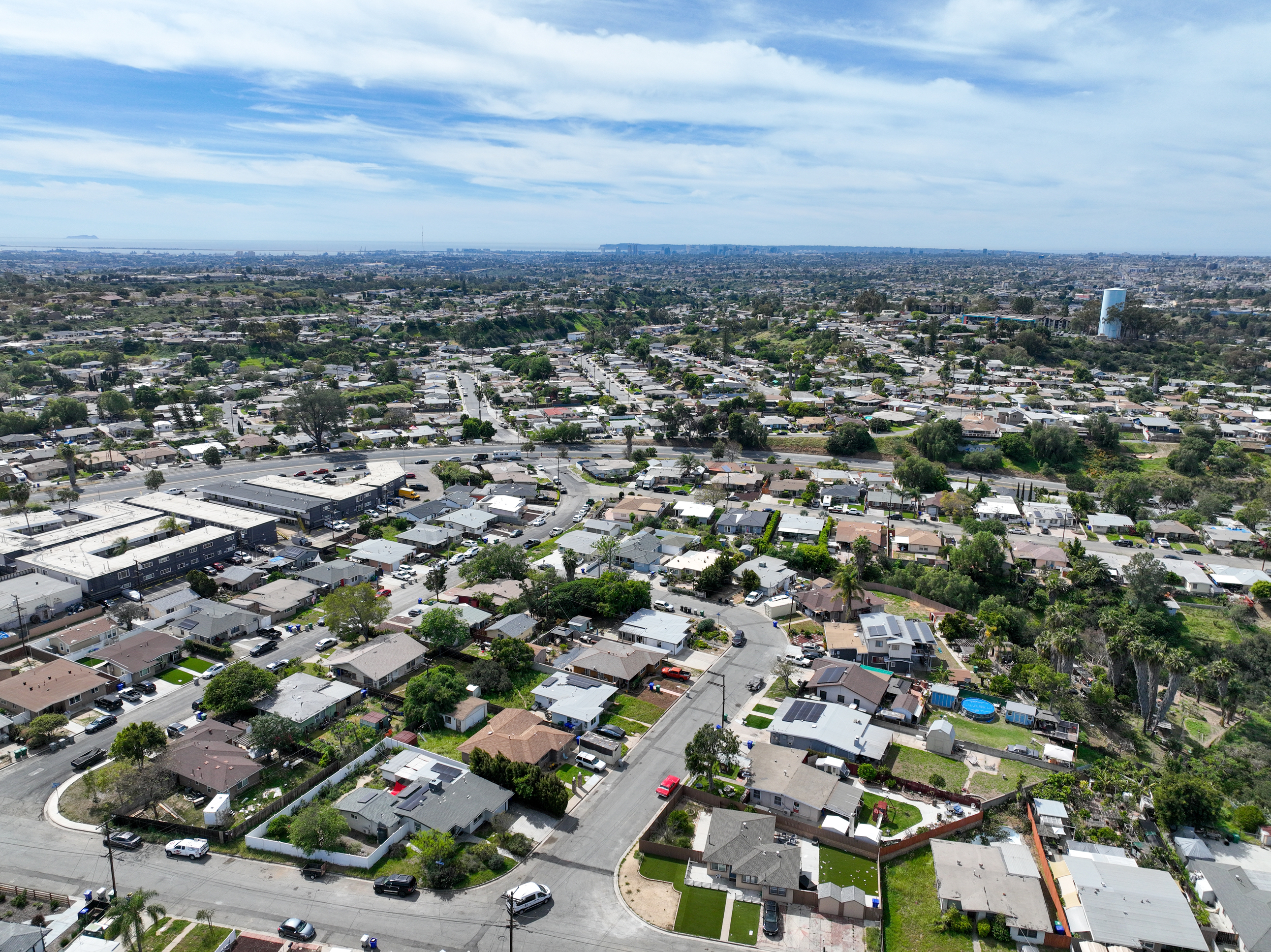
Updated August 2026 | Authored by Scott Engle, Broker DRE #01332676 | Realty Management Group | Serving San Diego County Since 2005
Lemon Grove and Spring Valley sit side by side in Southeast San Diego County, share the same compliance framework, and are two of the county's most affordable rental markets. Their 2026 numbers are moving in completely different directions. Lemon Grove is rising broadly, with average rent up 9.6% year over year. Spring Valley is split, its northern ZIP down 8.2% while its southern corridor is up 18.7%. If you own in either, the compliance obligations are identical. The pricing decisions are not.
This is a market report. It covers current rents by ZIP and bed count, what the 2026 statutes require, and what management costs at these rent levels.
Quick Answer
What is the average rent in Lemon Grove in 2026? $2,860 per month, up 9.6% over the last 12 months (RentCast, July 2026). By type: studio $1,450, 1BR $2,110, 2BR $3,050, 3BR $3,480, 4BR $3,660.
What is the average rent in Spring Valley in 2026? It splits by ZIP. 91977 in the north averages $2,670 per month, down 8.2%. 91978 along the Jamacha corridor averages $3,550 per month, up 18.7%, on larger single-family homes (RentCast, July 2026).
Do Lemon Grove or Spring Valley have rent control? Neither. Lemon Grove is an incorporated city and has not adopted a local rent control or just-cause ordinance. Spring Valley is unincorporated San Diego County, and the County has not adopted a countywide tenant protection ordinance for unincorporated areas. Both are governed by state AB 1482 alone, which caps increases at 8.2% for August 1, 2026 through July 31, 2027 on covered properties.
What is the difference between the two for landlords? Lemon Grove is a single ZIP, 91945, with trolley access and relatively uniform pricing. Spring Valley spans two ZIPs that price roughly $880 per month apart at the average level. Compliance is identical. Pricing is not.
What does property management cost here? Percentage-based managers in San Diego commonly charge 8% to 10% of collected rent plus a placement fee. Realty Management Group charges a flat $199 per month with no leasing or renewal fees, which is $2,388 per year regardless of rent.
2026 Market Snapshot
| Market | Average rent | 12-month change | RMG days to lease | RMG tenant stay |
|---|---|---|---|---|
| Lemon Grove, 91945 | $2,860 | +9.6% | 9 days | 41 months |
| Spring Valley, 91977 | $2,670 | −8.2% | 14 days, both ZIPs | 38 months, both ZIPs |
| Spring Valley, 91978 | $3,550 | +18.7% | ||
| National benchmark | Not applicable | Not applicable | 30 to 41 days | About 27 months |
Rents: RentCast, July 2026. RMG operating figures reflect internal Rentvine management data across 16 managed Lemon Grove units and 26 managed Spring Valley units, 2026. Spring Valley operating figures cover ZIPs 91977 and 91978 combined. Industry benchmarks: time to lease, RentCafe 2025 national and Apartment List 2026; national average tenancy approximately 27 months.
Bottom line: two adjacent markets, one framework, three very different pricing pictures.
On This Page
Lemon Grove (ZIP 91945)
Lemon Grove is a small incorporated city known for its "Best Climate on Earth" motto and its giant lemon statue, and it is one of San Diego County's more affordable urban rental markets, with trolley access to downtown and steady renter demand. In 2026 it is showing broad-based rent growth, with the average up 9.6% over the year and most unit types rising. Unlike neighboring Spring Valley, it is a single ZIP with relatively uniform pricing.
| Lemon Grove, 91945 | Average rent | 12-month change |
|---|---|---|
| All units | $2,860 | +9.6% |
| Studio | $1,450 | +5.8% |
| 1 bedroom | $2,110 | +6.0% |
| 2 bedroom | $3,050 | +14.7% |
| 3 bedroom | $3,480 | +1.2% |
| 4 bedroom | $3,660 | Small, volatile segment |
Source: RentCast, July 2026. Rents across the market range from $1,450 to $8,888. The 4 bedroom segment carries a large year-over-year gain on a small listing count, so the dollar level is usable and the percentage is not.
The Lemon Grove story is broad-based strength. Unlike markets carried by a single segment, most unit types rose here, with 2 bedroom at 14.7% the standout among the reliable, higher-volume categories. For owners that means less risk of mispricing by unit type. The AB 1482 cap still applies, so a home set below market at signing stays behind until turnover, and with RMG's Lemon Grove tenancies averaging 41 months, that is a long time to carry the gap.
Bottom line: Lemon Grove is rising across the board. Price to the bed count and re-benchmark at every renewal.
Spring Valley (ZIPs 91977 and 91978)
Spring Valley is unincorporated San Diego County. It is two markets in one: the dense northern core in 91977 and the larger-lot southern Jamacha and Sweetwater Springs corridor in 91978, which in 2026 are moving in opposite directions. That split makes pricing to the correct ZIP the single most valuable decision a Spring Valley owner makes.
| Unit type | 91977, north core | 91978, Jamacha corridor |
|---|---|---|
| Average, all units | $2,670 (down 8.2%) | $3,550 (up 18.7%) |
| Studio | $1,600 | Not published |
| 1 bedroom | $1,750 | $2,200 |
| 2 bedroom | $2,270 | $3,300 |
| 3 bedroom | $3,650 | $3,480 |
| 4 bedroom | $4,130 | $4,620 |
Source: RentCast, July 2026. 91977 is denser and apartment-heavy. 91978 is larger single-family homes on a premium corridor with thin inventory, roughly a dozen active listings, so its per-bedroom figures are volatile and should be treated as directional.
The Spring Valley story is divergence. Pricing a Jamacha corridor home off the softer north-side average leaves real money on the table, and on a covered property the 8.2% cap limits how fast that gap can be recovered. Note also that 3 bedroom is the one row where 91977 prices above 91978, which cuts against the simple north-cheap, south-expensive read and is a reason to benchmark by ZIP and bed count together rather than by ZIP alone.
Bottom line: Spring Valley is not one market. Price to the ZIP and the bed count, not to the area average.
Not sure which number your property should be priced against?
We will benchmark it against live comps for your ZIP, 91945, 91977 or 91978, and your unit type, and confirm whether it is AB 1482 covered or exempt. Free, written, no obligation.
Get My Free Rental Analysis2026 Compliance: The Same Rules in Both Markets
Lemon Grove is an incorporated city and has not adopted a local rent control or just-cause ordinance. Spring Valley is unincorporated San Diego County, and the County has not adopted a countywide tenant protection ordinance for unincorporated areas. Both are therefore governed by state AB 1482 alone. The state notice form is sufficient in both, with no city-specific addendum required, which is a genuine simplification versus the City of San Diego, Chula Vista, or Imperial Beach. Verified August 2026.
AB 1482, rent cap and just cause. The maximum allowable increase is 8.2% for August 1, 2026 through July 31, 2027, which is 5% plus 3.2% CPI using the BLS San Diego-Carlsbad twelve month change ending March 2026. The statute references April, but no April figure is published for San Diego, so the March-to-March fallback applies. Only one increase is permitted in any twelve month period. Just cause applies after 12 months of tenancy. The exemption notice must be served, or a qualifying single-family home is treated as covered.
AB 12, deposit cap. Since July 1, 2024, a landlord may collect no more than one month's rent as a security deposit, furnished or unfurnished, under Civil Code §1950.5. A narrow exception allows a landlord who is a natural person owning no more than two residential rental properties totaling no more than four units to collect up to two months. That exception does not apply if the prospective tenant is an active duty servicemember.
AB 2801, deposit photos. Two separate effective dates. Since April 1, 2025, landlords must photograph the unit immediately after the tenancy ends and before any cleaning or repairs, plus photos after repairs where a deduction is claimed. That applies to all tenancies regardless of when they began. Since July 1, 2025, move-in photos are also required, but only for tenancies beginning on or after that date. A single April 1, 2025 date does not cover all three photo sets. The itemized statement is still due within 21 days.
AB 628, appliances, effective January 1, 2026. Leases signed, renewed, or amended on or after January 1, 2026 must include a working stove and refrigerator. Civil Code §1941.1.
AB 2747, rent reporting. Landlords must offer tenants the option to report rent payments to credit bureaus, at lease signing and annually thereafter.
AB 2493, screening and fees. Written screening criteria must be established before marketing. Fees must reflect actual cost and are refunded to applicants not offered a tenancy unless retained under the statute.
Notice timing under Civil Code §827: 30 days for an increase of 10% or less, 90 days for an increase above 10%. Add 5 calendar days if mailed within California. Text and email are not written notice. See the full AB 1482 exemption guide and the rent control ordinance map.
Bottom line: no local layer in either market. The state documentation is the whole obligation, and it applies in full.
What Management Costs at These Rent Levels
Management fees are one of the few operating expenses an owner can compare directly before hiring anyone. Percentage-based managers in San Diego commonly charge 8% to 10% of collected rent, plus a placement fee at every turnover, typically 50% to 100% of one month's rent, and often a renewal fee. Realty Management Group charges a flat $199 per month for one to three units, or $179 per unit for four to sixteen, with no leasing fee, no renewal fee, and no maintenance markup.
Compared month to month the difference is modest. Compared across a full ownership cycle including one turnover, it is not.
| Three years on a $2,860 Lemon Grove home, one turnover | Percentage manager at 8% | RMG flat fee |
|---|---|---|
| Management fee, year 1 | $2,746 | $2,388 |
| Management fee, three years | $8,238 | $7,164 |
| Placement fee, one turnover | $2,860 | $0 |
| Three-year total | $11,098 | $7,164 |
| Difference over three years | $3,934 | |
Assumptions stated: $2,860 monthly rent held flat, an 8% management rate, one placement fee equal to one month's rent, and one turnover in three years. No renewal fees and no maintenance markup are counted on the percentage side, so the comparison is conservative. Percentage rates and placement fees vary by company; check the specific agreement.
The monthly fee is the smaller half of the story. The placement fee is where the two models genuinely separate, because it is charged per turnover rather than per month. On a $3,550 Jamacha corridor home, a single placement fee exceeds a full year of flat-fee management. It also creates a structural difference in incentive: a percentage manager earns a new fee every time a tenant leaves, while a flat fee earns the same whether the tenant stays three years or thirty.
Bottom line: compare the three-year total including turnover, not the headline percentage.
RMG portfolio performance
Across the 400+ units RMG manages countywide, 2026
13 days
Average days on market to lease. National benchmark 30 to 41 days.
39 months
Average tenant retention. National benchmark about 27 months.
48.6 months
Average owner retention
98.9%
Portfolio occupancy. Single-family benchmark about 94.4%.
99.4%
On-time rent collection
Zero
Evictions filed since 2005
RMG figures reflect internal Rentvine management data across 400+ managed units countywide, 2026. Local figures: 16 managed Lemon Grove units, 9 day average time to lease, 41 month average tenancy, 98.9% on-time rent, 100% occupancy, zero evictions since 2005. 26 managed Spring Valley units across 91977 and 91978, 14 day average time to lease, 38 month average tenancy, 99.3% on-time rent, 100% occupancy, zero evictions since 2005. Industry figures: time to lease, RentCafe 2025 national and Apartment List 2026. Single-family occupancy approximately 94.4%, September 2025. National average tenancy approximately 27 months.
Rated 4.9 out of 5 across 127 Google reviews from San Diego property owners.
Realty Management Group has been named Best Property Management Company in San Diego by Expertise.com in 2023, 2024, and 2025, and a San Diego Market Leader by PropertyManagement.com. See what owners say on our reviews page.
Frequently Asked Questions
What is the average rent in Lemon Grove in 2026?
$2,860 per month, up 9.6% over the last 12 months. By type: studio $1,450, 1BR $2,110, 2BR $3,050, 3BR $3,480, 4BR $3,660. Source: RentCast, July 2026, ZIP 91945.
What is the average rent in Spring Valley in 2026?
It differs by ZIP. 91977 in the north averages $2,670 per month, down 8.2%. 91978 along the Jamacha corridor averages $3,550 per month, up 18.7% on larger single-family homes. Source: RentCast, July 2026.
Do Lemon Grove or Spring Valley have rent control?
Neither. Lemon Grove is an incorporated city and has not adopted a local rent control or just-cause ordinance. Spring Valley is unincorporated San Diego County, and the County has not adopted a countywide tenant protection ordinance for unincorporated areas. Both are governed by California's statewide AB 1482, which caps annual increases at 8.2% for August 1, 2026 through July 31, 2027 on covered properties and permits only one increase per twelve month period.
Is Spring Valley incorporated? Is Lemon Grove?
Lemon Grove is an incorporated city, ZIP 91945, with its own city council and municipal code. Spring Valley is an unincorporated community in San Diego County, ZIPs 91977 and 91978, with no city government, governed directly by the County. Neither has a local tenant protection ordinance, so both follow state AB 1482 alone.
What is the maximum security deposit in Lemon Grove or Spring Valley?
One month's rent, furnished or unfurnished, under AB 12 effective July 1, 2024. A narrow exception allows a landlord who is a natural person owning no more than two residential rental properties totaling no more than four units to collect up to two months, but that exception does not apply if the prospective tenant is an active duty servicemember.
Why do the two Spring Valley ZIPs price so differently?
91977 is the denser northern core with more apartment stock and more affordable pricing. 91978 covers the Jamacha and Sweetwater Springs corridor, which is larger-lot single-family housing. The gap at the average level is $880 per month. Pricing a 91978 home off the 91977 average is the most expensive mistake available in this market, because on a covered property the 8.2% cap limits how fast the gap can be recovered.
How much does property management cost in Lemon Grove or Spring Valley?
Percentage-based managers in San Diego commonly charge 8% to 10% of collected rent, plus a placement fee at turnover and often a renewal fee. Realty Management Group charges a flat $199 per month for one to three units, or $179 per unit for four to sixteen, with no leasing, renewal, or maintenance markup fees. On a $2,860 Lemon Grove home over three years with one turnover, that is $11,098 versus $7,164 on the stated assumptions. See the full cost comparison.
Key Takeaways
- Lemon Grove, 91945: average rent $2,860, up 9.6%, broad-based growth across most unit types.
- Spring Valley, 91977 and 91978: split market. North $2,670, down 8.2%. South $3,550, up 18.7%. An $880 monthly gap at the average.
- Lemon Grove has no local ordinance. Spring Valley is unincorporated and the County has none. Both are state AB 1482 only, capped at 8.2% for August 1, 2026 through July 31, 2027, one increase per twelve months.
- The exemption notice must be served on qualifying single-family homes, or the cap applies for the whole tenancy.
- AB 2801 has two effective dates. April 1, 2025 for move-out and post-repair photos on all tenancies. July 1, 2025 for move-in photos, only on tenancies starting on or after that date.
- RMG local results: Lemon Grove, 16 units, 9 day lease, 41 month tenancy, zero evictions since 2005. Spring Valley, 26 units, 14 day lease, 38 month tenancy, zero evictions since 2005.
- Over three years with one turnover, an 8% manager costs roughly $3,934 more than a flat $199 fee on a $2,860 home.
Market figures are from RentCast for Lemon Grove (91945) and Spring Valley (91977, 91978), July 2026, and vary by ZIP, condition, and source. The 91978 corridor's thin active listing count makes its per-bedroom figures volatile. RMG operational figures reflect internal Rentvine management data, 2026. Industry benchmarks from RentCafe 2025 and Apartment List 2026. Management cost comparisons use the assumptions stated alongside each table and are illustrative; percentage rates and placement fees vary by company. Regulatory references include California AB 1482 (Civil Code §§1947.12, 1946.2), AB 12 and AB 2801 (Civil Code §1950.5), AB 628 (Civil Code §1941.1), AB 2747, AB 2493, and Civil Code §827, verified August 2026. Local ordinance status for Lemon Grove and unincorporated San Diego County verified August 2026. This guide is general information, not legal advice. Consult a qualified California attorney for your specific property.
Is Your Lemon Grove or Spring Valley Rent Set Right, and Is Your Property AB 1482 Compliant?
For your property, at no cost, we will:
- Price it against live comps for your ZIP, 91945, 91977 or 91978, and unit type
- Confirm whether it is AB 1482 covered or exempt
- Check that your exemption notice and lease are compliant for 2026
- Flag deposit or documentation gaps creating risk today
- Provide a written analysis, no obligation
Get My Free Rental Analysis Call (619) 456-0000
Realty Management Group | 4025 Camino Del Rio South, Suite 300, San Diego, CA 92108 | (619) 456-0000 | info@choosermg.com
About the Author
Scott Engle is the Broker/Owner of Realty Management Group (DRE #01332676, Corp DRE #02075336). He has been a licensed California broker since 2003 and has managed San Diego County rental property since 2005. RMG manages 400+ units countywide on a flat $199 per month fee, holds a 4.9 star rating across 127 Google reviews, and has been named Best Property Management Company in San Diego by Expertise.com in 2023, 2024, and 2025.
Related Articles
- Lemon Grove Property Management
- Spring Valley Property Management
- Spring Valley Property Management 2026: Full ZIP-by-ZIP Guide
- El Cajon Property Management 2026: East County Rental Guide
- Which San Diego Cities Have Rent Control? (2026 Ordinance Map)
- California AB 1482 Rent Control: Exemptions and the 2026 San Diego Cap
Markets We Serve
San Diego · Lemon Grove · Spring Valley · La Mesa · El Cajon · Santee · Chula Vista · National City · Mission Valley · Escondido · Poway · Multi-Family