Updated August 2026 | Scott Engle, Broker DRE #01332676 | Realty Management Group | Serving San Diego County Since 2005
North Park and South Park are two of San Diego's most renter-heavy, walkable-urban neighborhoods — and because both sit inside the City of San Diego, they carry a compliance layer most of the county doesn't: the City's Residential Tenant Protections Ordinance, which requires just cause from day one of a covered tenancy rather than after 12 months. For owners of the older small-multifamily stock that defines these neighborhoods, that single rule — plus accurate pricing in a softening 2026 market — is what separates a compliant, profitable rental from a costly mistake.
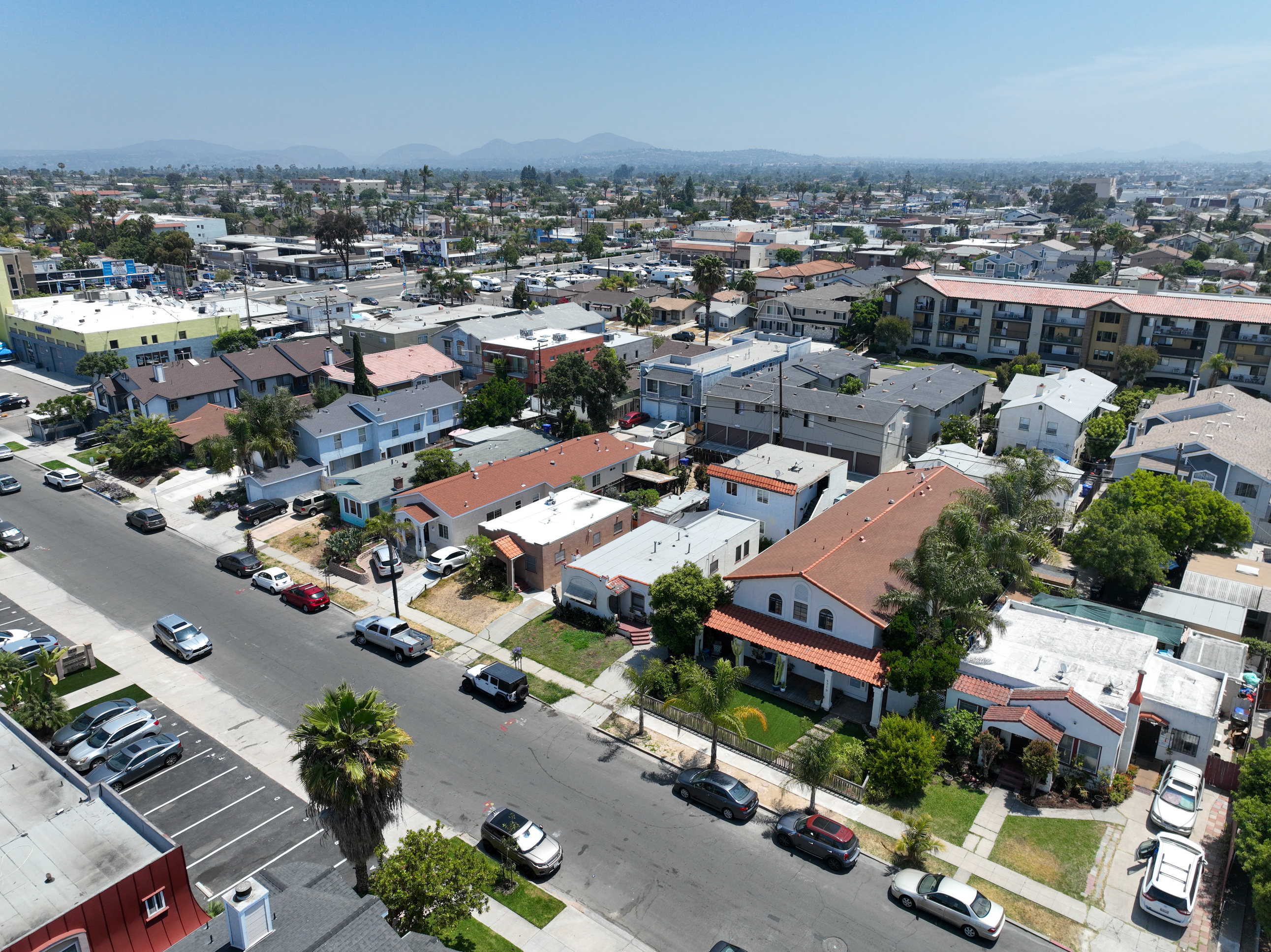
North Park (primarily ZIP 92104) and South Park (part of 92102, alongside Golden Hill) are adjacent uptown neighborhoods known for craftsman bungalows, vintage apartment courts, and a dense, amenity-rich rental market. Both are roughly two-thirds to 70%+ renter-occupied, and both are dominated by the older 2–3 star building stock that has proven the most resilient segment of the 2026 market — holding occupancy while luxury new construction softens.
The defining fact for owners here: these neighborhoods are inside the City of San Diego, so the City's Tenant Protections Ordinance applies on top of state AB 1482 wherever a tenancy is covered. That's the opposite of East County markets like El Cajon or La Mesa, where state law is the whole framework. Getting the local layer right is not optional.
The AB 1482 rent cap is 8.2% for increases with an effective date from August 1, 2026 through July 31, 2027 — 5% plus the San Diego regional CPI, which fell from 3.8% to 3.2%, down from 8.8% the prior year. The date that controls is the effective date of the increase, not the date the notice is served: a notice served in July that takes effect in August must use the current figure. Many North Park and South Park rentals are older multifamily properties that fall within AB 1482, though coverage turns on property type, ownership and applicable exemptions — not building age alone.
Quick Answers (North Park & South Park, 2026)
What is the average rent in North Park in 2026? North Park (ZIP 92104) averages $2,630/month, down 4.4% over the year (RentCast, July 2026). By type: studio ~$1,960; 1BR ~$2,220; 2BR ~$3,020; 3BR ~$4,350.
What is the average rent in South Park in 2026? South Park (ZIP 92102, with Golden Hill) averages $2,550/month, roughly flat year over year (−0.4%). By type: studio ~$1,770; 1BR ~$2,100; 2BR ~$2,830; 3BR ~$4,090.
How much can a landlord raise rent here in 2026? On a covered property, the AB 1482 cap is 8.2% for increases with an effective date from August 1, 2026 through July 31, 2027. Properly exempt properties have no state cap.
Do North Park and South Park have rent control? Not local rent control. They're inside the City of San Diego, so the City's Residential Tenant Protections Ordinance applies on top of state AB 1482, but it doesn't cap rent below the state formula — it adds just-cause protection from day one of a covered tenancy.
When does just cause apply in North Park or South Park? From day one of a covered tenancy under the City ordinance, rather than after 12 months as state AB 1482 provides. Exemptions exist, so coverage should be confirmed for the specific property before any termination notice is served.
What does property management cost here? Most San Diego managers charge 8–10% of collected rent plus a leasing fee at each turnover; flat-fee structures are the main alternative. See the cost section below for the comparison.
Market rent figures: RentCast.io for ZIPs 92104 (North Park) and 92102 (South Park/Golden Hill), July 2026. These ZIPs extend slightly beyond the neighborhood cores, so figures are directional for the immediate area.
The North Park & South Park Rental Market in 2026
North Park (ZIP 92104)
Average rent: $2,630/month, down 4.4% over 12 months — a dense, 1BR-heavy market (nearly half of active listings are one-bedrooms)
By type: studio ~$1,960; 1BR ~$2,220; 2BR ~$3,020; 3BR ~$4,350 (+5.3%); 4BR ~$5,150
Character: the denser, higher-volume half — a very active market (500+ listings) where accurate pricing matters because renters have options. The 3BR segment is the bright spot, up 5.3% while smaller units softened.
South Park & Golden Hill (ZIP 92102)
Average rent: $2,550/month, roughly flat (−0.4%) — holding steadier than North Park over the year
By type: studio ~$1,770; 1BR ~$2,100; 2BR ~$2,830; 3BR ~$4,090 (+9.4%); 4BR ~$3,650
Character: smaller, quieter, and more stable than North Park, with strong community identity. The 3BR segment led here too, up 9.4% — family-sized units are the resilient tier in both neighborhoods.
Source: RentCast.io for ZIPs 92104 and 92102, July 2026. Both neighborhoods softened modestly on average over the year while family-sized (3BR) units gained — the older, well-located small-multifamily stock is holding up better than luxury new construction.
The 2026 takeaway for owners: this is a split market. Average rents dipped, but the older 2–3 star buildings that make up most of North Park and South Park held occupancy while high-end new construction absorbed the softness. Accurate, condition-based pricing — not chasing last year's peak — is the controllable lever, and on a covered property the AB 1482 cap means an under-set rent stays low until turnover.
North Park & South Park Landlord Laws: San Diego TPO + AB 1482
Because North Park and South Park are inside the City of San Diego, owners here operate under two layers: state AB 1482 and the City's Residential Tenant Protections Ordinance (San Diego Municipal Code §§98.0701–98.0710). The two have separate coverage tests and separate notice requirements, and a property can be exempt from one and not the other — so the state notice alone does not establish compliance in the City of San Diego.
Just cause from day one of a covered tenancy. This is the defining difference. Where the ordinance applies, a landlord needs a valid just-cause basis to end a tenancy from the beginning — there is no 12-month grace window like state AB 1482 provides. Exemptions exist, so owners should confirm whether the property and tenancy qualify before serving a termination notice.
The exemptions that matter most here. Two do the real work in these neighborhoods: housing issued a certificate of occupancy within the previous 15 years, and property that is alienable separate from the title to any other dwelling unit — a single-family home, condo or townhome — where the owner is not a REIT, a corporation or an LLC with a corporate member. The second one is conditional: it applies only if the tenant received the specific written exemption notice the ordinance prescribes.
Two different notices, depending on which side you land on. A covered property requires the disclosure in §98.0705, in the prescribed wording at no less than 12-point type, delivered with the Tenant Protection Guide published by the San Diego Housing Commission (sdhc.org); for tenancies commenced or renewed on or after June 24, 2023, both go in the lease or in a written notice signed at signing. An exempt single-family home or condo requires a different verbatim notice under §98.0703(l)(2), which must be in the lease for tenancies commenced or renewed on or after January 1, 2024 — and that is separate from, not a substitute for, the AB 1482 exemption notice under Civil Code §§1946.2(e)(8) and 1947.12(d)(5).
Notice to the Housing Commission. After serving a termination notice on a tenant — at-fault or no-fault — the landlord must give written notice to SDHC no later than three business days later. It is easy to miss, and under §98.0710 a failure to comply with any provision of the division renders the termination notice void.
Relocation assistance. No-fault terminations (owner move-in, substantial remodel, withdrawal from the market) trigger relocation assistance of two months' actual rent, or three months if the tenant is a senior (62+) or disabled — beyond the state baseline.
AB 1482 cap still applies. 8.2% on covered properties, for increases with an effective date from August 1, 2026 through July 31, 2027. The City ordinance governs how a tenancy ends; the state cap governs how much rent can rise.
State laws that also apply
AB 12 — deposit cap. Since July 1, 2024, California generally limits security deposits to one month's rent, furnished or unfurnished (Civil Code §1950.5). A statutory exception preserves a two-month limit where the landlord is a natural person, or an LLC whose members are all natural persons, and owns no more than two residential rental properties collectively containing no more than four dwelling units offered for rent. The exception does not apply when the tenant is a service member.
AB 2801 — deposit photos. Timestamped photos before move-in, after move-out, and after any repair for which a deduction is claimed; itemized statement within 21 days.
AB 628 — stove and refrigerator (eff. Jan 1, 2026). A working stove and refrigerator are habitability requirements under Civil Code §1941.1 for leases entered into, amended, renewed, or extended on or after January 1, 2026 — relevant given the vintage stock here. A tenant may agree in writing to supply their own refrigerator, but a landlord cannot require it. A supplied stove or refrigerator subject to a manufacturer or public-entity recall must be repaired or replaced within 30 days of notice of the recall.
AB 2493 — application screening fees (eff. Jan 1, 2025). A landlord charging an application screening fee must provide the screening criteria in writing with the application and use one of the processes permitted by Civil Code §1950.6. Under the first-qualified-applicant method, completed applications are considered in the order received and the first applicant meeting the criteria is approved. Under the alternative, the landlord may select on other grounds but must refund the entire screening fee to every applicant not selected — within 7 days of leasing to someone else, or within 30 days of receiving the application if no one is selected. The fee remains limited to actual screening costs and to a statutory maximum adjusted annually.
Notice timing under Civil Code §827: 30 days for an increase of 10% or less, 90 days for over 10% (add 5 if mailed). See the San Diego rent-control ordinance map and the AB 1482 exemption guide.
Managing Older North Park & South Park Rental Properties
North Park and South Park are dominated by pre-1960 craftsman homes, vintage apartment courts, duplexes, and fourplexes. That stock is the resilient part of the 2026 market — but it comes with specific operating realities that newer buildings don't:
Aging building systems. Original plumbing, knob-and-tube or early electrical, and vintage heating are common. A system that fails mid-tenancy is a habitability issue under Civil Code §1941.1, not a routine repair — and on a covered tenancy, the ordinance's protections make proper handling essential.
Appliance compliance under AB 628. On vintage stock, confirming a working stove and refrigerator (and checking recall status) before each new or renewed lease is an active compliance step, not a one-time setup.
ADUs and converted spaces. These neighborhoods have significant ADU and garage-conversion activity. Owners should confirm permitting status before leasing, because unpermitted conversions can create habitability, insurance, disclosure and enforcement problems.
Turnover economics in a renter-heavy market. With 70%+ renter occupancy and high rents, every turnover carries leasing, vacancy and make-ready costs. A flat fee that doesn't reward turnover aligns the manager with keeping good tenants in place.
RMG in North Park & South Park — By the Numbers
Across the 39 units RMG manages in North Park and South Park, as of 2026
7–9 days
Average days on market to lease (7 in South Park, 9 in North Park)
44–46 months
Average tenant stay (~3.7–3.8 years)
Zero
Evictions across every North Park and South Park unit RMG has managed since 2005
100%
Occupancy across managed units (as of July 2026)
99.3–99.4%
On-time rent collection across managed units
Since 2005
RMG has managed these neighborhoods since the company's founding
Figures reflect RMG's internal management data (Rentvine) across its 39 managed North Park and South Park units (22 in South Park, 17 in North Park), as of 2026. Zero evictions is measured across all North Park and South Park units RMG has managed since 2005.
Management Cost & Return in North Park and South Park
Most managers charge 8–10% of collected rent plus a leasing fee of up to one month's rent at every turnover. RMG charges a flat $199/month (1–3 units; $179/month per unit for 4–16) — no percentage, no leasing fee, no renewal fee, no maintenance markup — which matters because every turnover in these high-rent neighborhoods carries leasing, vacancy and make-ready costs, and the fee stays flat as rent rises. See the full cost comparison.
RMG Portfolio Performance
Across the 400+ units RMG manages countywide, as of 2026
13 days
Average days on market to lease
39 months
Average tenant retention
48.6 months
Average owner retention
98.9%
Portfolio occupancy
99.4%
On-time rent collection
Same day
Maintenance response, with same-day repair whenever possible
RMG operational figures reflect internal management data across its 400+ managed units countywide, as of 2026.
Rated 4.9 out of 5 across 127 Google reviews from San Diego property owners.
Realty Management Group is recognized as a Best Property Management Company in San Diego by Expertise.com (2023, 2024, and 2025) and named a San Diego Market Leader by PropertyManagement.com. See what owners say on our reviews page.
Key Takeaways
- North Park (92104): $2,630 avg, down 4.4% — dense, 1BR-heavy. South Park (92102): $2,550, roughly flat — smaller, steadier. 3BR led both.
- Both are inside the City of San Diego — the City TPO applies on top of AB 1482, with just cause from day one of a covered tenancy, not after 12 months.
- Coverage is not a function of building age alone — property type, ownership structure and exemption notices all matter, and a property can be exempt from one law and not the other.
- Covered properties need the §98.0705 disclosure plus the SDHC Tenant Protection Guide; exempt single-family homes and condos need a separate verbatim notice under §98.0703(l)(2) in addition to the AB 1482 exemption notice.
- SDHC must be notified within three business days of serving a termination notice, or the notice can be void under §98.0710.
- The AB 1482 cap is 8.2% for increases effective Aug 1, 2026–Jul 31, 2027, down from 8.8% the prior year.
- RMG's local results: 39 units, 7–9 day leasing, 44–46 month tenancies, zero evictions since 2005.
- The older 2–3 star small-multifamily stock is the resilient 2026 segment — accurate pricing and retention are the levers.
Frequently Asked Questions
What is the average rent in North Park in 2026?
North Park (ZIP 92104) averages $2,630/month, down 4.4% over the year (RentCast, July 2026). By type: studio ~$1,960; 1BR ~$2,220; 2BR ~$3,020; 3BR ~$4,350.
What is the average rent in South Park in 2026?
South Park (ZIP 92102, with Golden Hill) averages $2,550/month, roughly flat year over year (−0.4%). By type: studio ~$1,770; 1BR ~$2,100; 2BR ~$2,830; 3BR ~$4,090.
How much can a landlord raise rent in San Diego in 2026?
On a property covered by AB 1482, the maximum increase is 8.2% for any increase with an effective date from August 1, 2026 through July 31, 2027 — 5% plus the San Diego regional CPI of 3.2%. The controlling date is the effective date of the increase, not the date the notice is served, so a notice served in July that takes effect in August must use the current figure. Properly exempt properties have no state cap on the amount.
Are North Park rentals subject to AB 1482?
Many are. Older multifamily buildings — the dominant stock in North Park — commonly fall within AB 1482. But coverage depends on property type, ownership structure and whether an exemption applies and was properly noticed, not on building age by itself. Housing with a certificate of occupancy issued within the previous 15 years is exempt, and that window moves forward each year.
Are single-family homes in North Park exempt from rent control?
Often, but only conditionally, and under two separate laws. A single-family home or condo owned by an individual rather than a REIT, corporation or LLC with a corporate member can be exempt from AB 1482 and from the City ordinance — but each exemption requires its own written notice to the tenant, in that law's prescribed wording. Missing the City notice under §98.0703(l)(2) leaves the property subject to the ordinance's just-cause rules even if the AB 1482 notice was given correctly.
Do North Park and South Park have rent control?
There is no local rent cap. Both are inside the City of San Diego, so the City's Residential Tenant Protections Ordinance applies on top of state AB 1482, but it does not cap rent below the state formula — it adds just-cause protection from day one of a covered tenancy.
Does San Diego's Tenant Protections Ordinance apply to South Park?
Yes — South Park is within City of San Diego limits, so the ordinance (SDMC §§98.0701–98.0710) reaches properties there, subject to the same exemptions that apply citywide. It does not reach unincorporated San Diego County or other cities in the county, which follow state law alone except for Chula Vista and Imperial Beach.
When does just cause apply in North Park or South Park?
From day one of a covered tenancy under the City ordinance, rather than after 12 months as state AB 1482 provides. A fixed-term lease of three months or less is outside the ordinance's definition of a tenancy, though protections apply once it continues month to month. Coverage should be confirmed for the specific property before any termination notice is served.
How much does a North Park property manager cost?
Most San Diego managers charge 8–10% of collected rent plus a leasing fee that can reach one month's rent at each turnover, and often renewal and maintenance markups on top. RMG charges a flat $199/month for 1–3 units ($179/month per unit for 4–16) with no leasing fee, renewal fee or maintenance markup, and the fee does not rise with rent.
Is North Park a good rental market for owners?
Yes — it's roughly 70%+ renter-occupied with consistent walkable-urban demand, and the older 2–3 star building stock has been the resilient segment of the 2026 market, holding occupancy while luxury new construction softened. Accurate pricing and strong retention are the main controllable factors.
Market figures are from RentCast.io for ZIPs 92104 (North Park) and 92102 (South Park/Golden Hill), July 2026, and vary by block, condition, and source; these ZIPs extend somewhat beyond the neighborhood cores. RMG operational figures reflect internal management data (Rentvine) as of 2026. Regulatory references include California AB 1482 (Civil Code §§1947.12, 1946.2), AB 12 and AB 2801 (Civil Code §1950.5), AB 628 (Civil Code §1941.1), AB 2493, Civil Code §827, and the City of San Diego Residential Tenant Protections Ordinance (SDMC §§98.0701–98.0710). Coverage and exemption determinations are property-specific. This guide is general information, not legal advice; consult a qualified California attorney for your specific property.
Is Your North Park or South Park Rental Priced Right — and City-Ordinance Compliant?
For your property, at no cost, we will:
- Price it against live 92104 / 92102 comps for your unit type
- Confirm City of San Diego TPO obligations for your building
- Check that your just-cause and notice language is city-compliant for 2026
- Flag AB 1482, deposit, or appliance-compliance gaps on older stock
- Provide a written analysis — no obligation
Related Articles