Updated August 2026 | Authored by Scott Engle, Broker DRE #01332676 | Realty Management Group | Serving San Diego County Since 2005
California security deposit law changed twice in two years: AB 12 capped most deposits at one month's rent on July 1, 2024, and AB 2801 added mandatory timestamped photo documentation phasing in through July 1, 2025. For a San Diego rental, both now govern every deposit you collect, hold, and return — and a single missed step can convert a routine deduction into a penalty of up to twice the deposit.
This is the complete 2026 guide to security deposits for San Diego County rental owners and tenants — the maximum amount, the 21-day return deadline, the photo-documentation rules, what can and can't be deducted, and the penalties for getting it wrong. All figures are current as of August 2026 and tied to the governing statute. RMG provides flat-fee San Diego property management, including full deposit compliance, across the county.
San Diego has no countywide security-deposit ordinance beyond state law — California Civil Code §1950.5 governs deposits statewide, and the City of San Diego, Chula Vista, and Imperial Beach tenant ordinances regulate evictions and notices, not deposit amounts. So for deposits, the state rules below are the complete picture countywide.
Who This Guide Is For
This guide is written for:
- San Diego County rental owners collecting or returning a deposit
- Landlords updating leases for AB 12 and AB 2801 compliance
- Tenants trying to understand their deposit rights and the 21-day clock
- Self-managing owners who want a documented, defensible deposit process
This guide is not legal advice:
- It is general information current as of August 2026; confirm specifics with a qualified attorney
- Commercial tenancies follow different rules and are out of scope
Security Deposit Quick Answers (2026)
What is the maximum security deposit in California? One month's rent for most landlords, under AB 12 (effective July 1, 2024), regardless of whether the unit is furnished or unfurnished. This is codified in California Civil Code §1950.5.
Is there an exception to the one-month cap? Yes. A "small landlord" — a natural person, or an LLC whose members are all natural persons, who owns no more than 2 residential rental properties with no more than 4 total units — may charge up to two months' rent. But for an active-duty military service member tenant, the cap is one month's rent with no exception.
How long does a landlord have to return a security deposit in California? 21 calendar days after the tenant moves out. Within that window the landlord must return the deposit and, if any amount is withheld, provide an itemized statement of deductions with receipts.
What does AB 2801 require? Timestamped photographs of the unit: after a tenancy ends and after any deposit-related cleaning or repairs (effective April 1, 2025), and before a new tenancy begins (effective July 1, 2025). The photos must accompany the itemized deposit statement.
What is the penalty for wrongfully withholding a deposit? If a landlord retains a deposit in bad faith, a court may award the tenant up to twice the amount of the deposit, in addition to actual damages, under Civil Code §1950.5.
Can a landlord charge a non-refundable deposit or a separate pet deposit? No. California does not allow any portion of a deposit to be labeled non-refundable, and a pet deposit counts toward the one-month cap — it cannot be charged on top of it.
The one-month deposit cap comes from AB 12, not SB 567. SB 567 is California's separate just-cause and eviction-reform law. Several online sources (and older landlord guides) conflate the two — the deposit limit is AB 12, amending Civil Code §1950.5.
TL;DR
- Cap: one month's rent (AB 12, eff. July 1, 2024); up to two months for qualifying small landlords; one month always for military tenants
- Deadline: 21 calendar days to return the deposit with an itemized statement and receipts
- Photos: AB 2801 requires timestamped move-out/post-repair photos (April 1, 2025) and move-in photos (July 1, 2025)
- Deductions: only for unpaid rent, repair of damage beyond normal wear and tear, and contracted cleaning to restore move-in condition
- Penalty: up to twice the deposit plus actual damages for bad-faith withholding
- No non-refundable deposits, no separate pet deposits — both prohibited under Civil Code §1950.5
- Governing law: Civil Code §1950.5, amended by AB 12; photo rules added by AB 2801. Applies countywide — no separate San Diego deposit ordinance
The Maximum Security Deposit in California (AB 12)
As of July 1, 2024, AB 12 caps the security deposit at one month's rent for most California landlords — furnished or unfurnished, with no distinction. This replaced the prior limits of two months' rent (unfurnished) and three months' (furnished). The change amends Civil Code §1950.5 and applies to deposits collected on or after July 1, 2024; deposits lawfully collected before that date do not have to be refunded down to the new cap.
The standard cap: one month's rent, for any landlord who is not a qualifying small landlord.
The small-landlord exception: up to two months' rent, but only if the owner (a) is a natural person, or an LLC in which all members are natural persons, AND (b) owns no more than two residential rental properties that collectively include no more than four dwelling units.
The military override: if the tenant is an active-duty service member, the cap is one month's rent regardless of the small-landlord exception — and it is unlawful to discriminate against a service member because of this rule.
Pet and "additional" deposits: a pet deposit is part of the security deposit and counts toward the cap. There is no separate, additional pet deposit allowed, and no portion of any deposit may be labeled non-refundable.
Statutory source: California Civil Code §1950.5, as amended by AB 12 (2023–2024).
AB 414: Electronic Deposit Returns, Effective January 1, 2026
Effective January 1, 2026, AB 414 amended Civil Code §1950.5 to address how the deposit gets back to the tenant. Where rent was collected electronically during the tenancy, the landlord must offer to return the security deposit electronically as well.
The tenant still chooses. They may ask for a mailed check instead. The obligation is to put the electronic option on the table, not to force it.
Nothing else changes. The 21-day deadline is untouched. So is the itemized statement requirement, the AB 2801 photo documentation, and the exposure of up to twice the deposit for bad-faith retention. AB 414 changes the delivery method, not the deadline or the substance.
Where it actually bites. If you collected rent through a portal all tenancy and then mail a paper check without offering the electronic option, you have a compliance gap on an otherwise correct disposition. It is a small procedural step attached to a process that already has real penalties, which is exactly the kind of thing that gets missed.
For every current California landlord statute by bill number, with effective dates and code sections, see our California Landlord Law Index.
The 21-Day Return Deadline
Within 21 calendar days of the tenant moving out, the landlord must either return the full deposit or return the balance with an itemized written statement of every deduction. If deductions for repairs or cleaning total more than $125, copies of receipts or invoices must be included with the statement.
If repairs can't be finished in 21 days: the landlord may instead provide a good-faith estimate of the cost within the 21-day window, then send the final itemized statement and actual receipts within 14 days after the work is completed.
The pre-move-out inspection: a tenant has the right to request an initial inspection before moving out, giving them a chance to fix issues and avoid deductions. The landlord must give written notice of this right.
Delivery: the statement and any refund are sent to the tenant's last known address (or a forwarding address they provide), by personal delivery or first-class mail within the deadline.
AB 2801: The Photo Documentation Rules
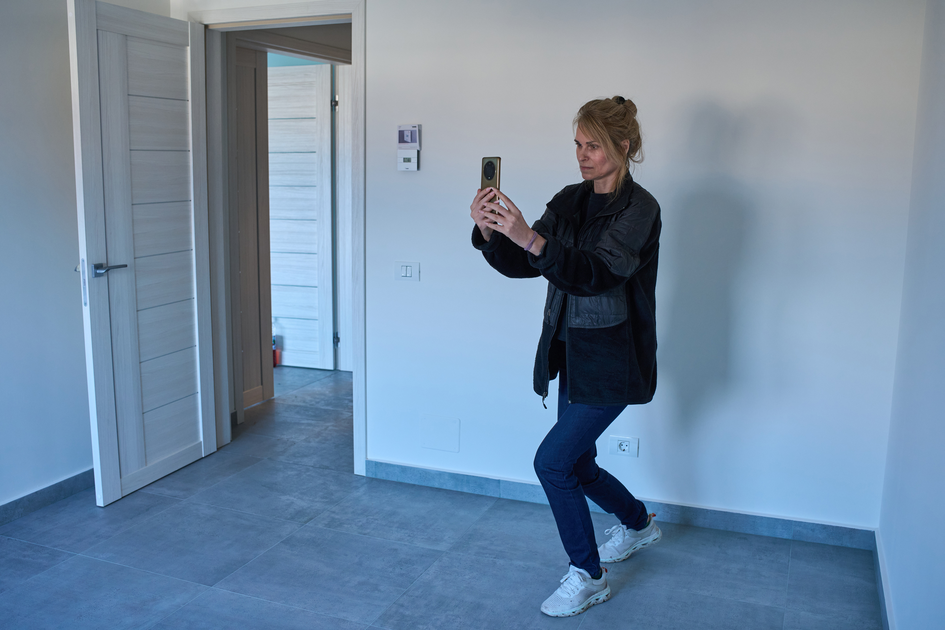
AB 2801 phases in timestamped photo requirements that make deposit deductions defensible — or, if skipped, hard to defend. The rule exists to stop deductions for damage a landlord can't prove the tenant caused.
Move-out photos (effective April 1, 2025): taken after the tenant vacates, before any cleaning or repairs.
Post-repair photos (effective April 1, 2025): taken after the cleaning or repairs for which a deduction is claimed are complete.
Move-in photos (effective July 1, 2025): required for all new tenancies, establishing the baseline condition the unit started in.
How they're used: all photos must be timestamped and provided to the tenant along with the itemized deposit statement. Without them, a contested deduction has no documented before/after basis — which is where deductions get reversed in small claims.
AB 2801 operates within the Civil Code §1950.5 framework — it governs photo documentation specifically, not a general standard for maintenance or other landlord-tenant records.
The Security Deposit Compliance Timeline
1. Move-In
Take timestamped move-in photos (AB 2801, required for new leases from July 1, 2025).
2. Tenancy
Tenant occupies the property and, at the end, gives notice to vacate.
3. Pre-Move-Out
Offer the optional initial inspection — give the tenant written notice of this right.
4. Move-Out
Tenant vacates; take move-out photos before any cleaning or repairs.
5. Repairs
Complete any cleaning/repairs, then take post-repair photos.
6. Within 21 Days — The Deadline
Send the itemized statement, the timestamped photos, and receipts (for any repair/cleaning deduction over $125).
If repairs run past 21 days
Send a good-faith estimate within the 21 days, then the final statement and actual receipts within 14 days after the work is completed.
The compliant sequence from move-in to deposit return under Civil Code §1950.5 and AB 2801.
What a Landlord Can — and Can't — Deduct
Allowed: unpaid rent; repair of damage beyond normal wear and tear; cleaning necessary to return the unit to the level of cleanliness it had at move-in; and restoration of personal property or keys, if the lease allows.
Not allowed — normal wear and tear: faded paint, minor carpet wear, small nail holes, and the ordinary aging of fixtures. A landlord cannot deduct to upgrade or to cover routine deterioration.
Not allowed — blanket fees: a flat "cleaning fee" charged regardless of condition is not permitted. If the tenant left the unit as clean as it was at move-in, there is nothing to deduct.
The documentation test: every deduction must be reasonably necessary to restore the unit to its move-in condition, and — under AB 2801 — supported by timestamped before/after photos and receipts. If you can't show it, you generally can't keep it.
What Getting a Deposit Wrong Actually Costs
The scenario: a landlord withholds $2,500 of a $3,000 deposit for cleaning and repairs but has no move-in photos, no itemized statement sent within 21 days, and no receipts. The tenant disputes it.
The exposure: with no documentation, the deductions are indefensible — the landlord likely returns the $2,500. If a court finds the withholding was in bad faith, it can add a penalty of up to twice the deposit — here up to $6,000 — on top of returning the deposit, plus the tenant's actual damages.
The fix cost: a few minutes of timestamped photos at move-in and move-out, and an itemized statement mailed inside 21 days. The entire exposure is preventable with process that costs essentially nothing.
Figures are illustrative. The point is the asymmetry: the documentation costs minutes; the penalty for skipping it can be multiples of the deposit.
Security Deposits in San Diego County: Local Notes
No separate deposit ordinance. San Diego County and its cities do not add a local security-deposit cap or deadline — Civil Code §1950.5 governs countywide. The City of San Diego, Chula Vista, and Imperial Beach ordinances regulate just cause and notices, not deposits.
Typical deposit amounts. With most county rents between roughly $2,000 and $4,000+, a one-month deposit commonly runs $2,000–$4,000 — and on a higher-rent home, that is a large sum to handle correctly under the 21-day clock.
Military markets. Near MCAS Miramar, Naval bases, and Camp Pendleton-adjacent North County, the one-month-for-service-members rule applies regardless of the small-landlord exception — relevant across Oceanside, Carlsbad, and the city's military-adjacent neighborhoods.
Older housing stock. Much of East County and central San Diego is older construction where genuine repair needs and normal wear and tear blur together — making move-in photos especially valuable for defending legitimate deductions.
For how deposits fit the broader compliance picture, see 2026 California rental laws and the San Diego rent-control ordinance map.
Frequently Asked Questions
What is the maximum security deposit in California in 2026?
One month's rent for most landlords under AB 12 (effective July 1, 2024), whether the unit is furnished or unfurnished. Qualifying small landlords (a natural person or all-natural-person LLC owning no more than 2 properties / 4 units) may charge up to two months' rent — except for active-duty military tenants, who are always capped at one month.
How long does my landlord have to return my deposit in San Diego?
21 calendar days after you move out. Within that time the landlord must return the deposit or send an itemized statement of deductions with receipts (for repair/cleaning deductions over $125). San Diego follows the state rule — there is no different local deadline.
Was the deposit cap set by SB 567 or AB 12?
AB 12 set the one-month security deposit cap, amending Civil Code §1950.5, effective July 1, 2024. SB 567 is a separate law dealing with just cause and eviction reform — it does not set the deposit limit. The two are frequently confused; for deposits, the controlling law is AB 12.
Can my landlord keep my whole deposit for cleaning?
Only for cleaning reasonably necessary to return the unit to its move-in level of cleanliness — not a blanket fee. If you left it as clean as you received it, there is nothing to deduct. Normal wear and tear (faded paint, minor carpet wear) cannot be charged, and under AB 2801 the landlord needs timestamped before/after photos to support any deduction.
What is the penalty if my landlord wrongfully keeps my deposit?
Under Civil Code §1950.5, a court may award the tenant up to twice the deposit amount as a penalty for bad-faith withholding, in addition to the actual amount wrongfully kept and any actual damages. Small-claims court (limit $12,500 for individuals) is the usual venue for these disputes.
Can a landlord charge a separate pet deposit in California?
No. A pet deposit is treated as part of the overall security deposit and counts toward the one-month cap — it cannot be charged in addition to it. California also prohibits labeling any portion of a deposit non-refundable. (Service and assistance animals are not pets and cannot be charged a pet deposit at all.)
Do the AB 2801 photo rules apply to my existing tenants?
The move-out and post-repair photo requirements took effect April 1, 2025 and apply at the end of any tenancy after that date. The move-in photo requirement applies to new tenancies starting July 1, 2025. For a tenant already in place before then, you won't have a compliant move-in photo set — which is exactly why documenting condition at the next turnover matters.
Does San Diego have its own security deposit rules?
No. San Diego County and its cities follow California state law (Civil Code §1950.5) for deposits — the same one-month cap, 21-day deadline, and AB 2801 photo rules statewide. The local tenant ordinances in the City of San Diego, Chula Vista, and Imperial Beach govern just cause and notices, not deposit amounts or timing.
Statutory references current as of August 2026: California Civil Code §1950.5; AB 12 (deposit cap, eff. July 1, 2024); AB 2801 (photo documentation, phasing in April 1 and July 1, 2025). This guide is general information, not legal advice; consult a qualified California attorney for your specific situation.
California's deposit rules reward documentation and punish guesswork. The cap is one month (AB 12), the clock is 21 days, the photos are mandatory (AB 2801), and the penalty for bad-faith withholding is up to double — none of which is hard to comply with, and all of which is expensive to ignore.
The owners who never lose a deposit dispute are the ones who photograph everything, itemize in writing, and mail it inside 21 days. The process is cheap. The mistakes are not.
Want Your Deposit Process Audited for AB 12 & AB 2801?
For your San Diego rental, at no cost, we will:
- Check whether your deposit amount complies with the AB 12 cap
- Review your move-in / move-out photo and documentation process for AB 2801
- Confirm your itemization and 21-day return workflow
- Flag lease language that could create a deposit dispute
- Provide a written rental analysis — no obligation
Related Articles
- 2026 California Rental Laws: What San Diego Landlords Need to Know
- Which San Diego Cities Have Rent Control? (2026 Ordinance Map)
- California AB 1482 Rent Control: Exemptions and the 2026 San Diego Cap
- How to Evict a Tenant in San Diego: Step-by-Step Guide (2026)
- How to Choose the Best Property Manager in San Diego